Psycho

*Sunday Classics*

I feel bad about this one.

I know that I’m supposed to be weak at the knees about Alfred Hitchcock’s “Psycho”. Don’t get me wrong, this is an incredible film, but I don’t necessarily think its stood the test of time as well as others have and I think its a film which loses a lot of its impact once the final twist has been revealed and isn’t as powerful the second time round. Unfortunately, because “Psycho” has so often been referred to as one of the most important and influential films of the 20th century, I already knew the twist going in and I think missed out on a lot of what makes the initial viewing so special.

The story famously goes that Alfred Hitchcock sent out his people all over the US to buy out as many copies of the book by Robert Bloch as possible so that cinema-goers had no idea of the film’s plot going in. The story was shrouded in secrecy before it arrived in theatres and was a work of marketing genius at the time, with even the actors not being told of the final twist prior to filming the scene. I do wish I hadn’t already known the plot before sitting down to watch the film for the first time, because it would have been something so memorable. Never before had a film explored insanity, murder, depravity and sexuality in such a blatant way before and 1960s audiences were gobsmacked.

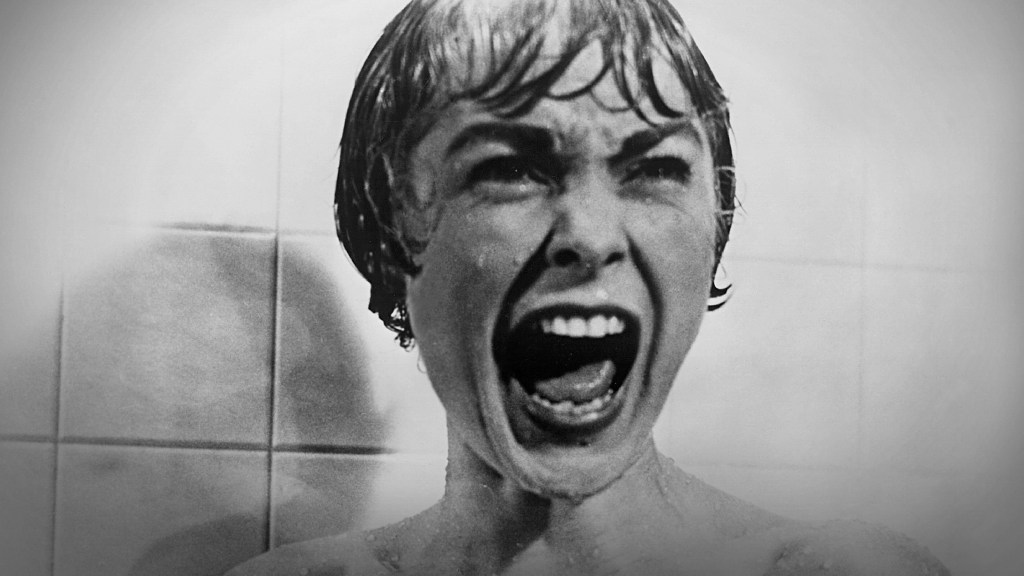
After being told that they cannot get married because of her married boyfriend’s debts, Marion Crane (Janet Leigh) steals $40,000 in cash from her employer and flees town . While driving one night on the run, the rain becomes too torrential and Marion checks in to the Bates Motel just off the interstate, run by mild mannered Norman Bates (Anthony Perkins). Bates seems pleasant and polite, perhaps a little strange considering he stuffs birds as a hobby and has an unusually close relationship with his mother, but Marion enjoys a meal with him as he complains what a hold she has over him but that she’s ultimately harmless and he’s happy to look after her. While showering after their meal, Marion (in of course arguably the most instantly recognisable and iconic scene in cinematic history), is brutally attacked by a shadowy figure with a knife and left to die. Norman confronts his mother after seeing blood and disposes of the body, of course to protect her and because he’s a good son. The rest of the film follows Marion’s sister Lila (Vera Miles), Marion’s boyfriend Sam (John Gavin) and Private Investigator Milton Arbogast (Martin Balsam) as they seek to find Marion and interrogate Norman as to her whereabouts. Although the film is sixty years old, I won’t spoil the final horrifying twist in case there is one lucky reader who hasn’t heard of it and wants to see for themselves. I wish I had that opportunity.

“Psycho” is pretty damn scary now, so in the 1960’s I can imagine how unsettling it would have been for audiences. What is especially so shocking is the fact that the film’s protagonist is killed only a third of the way through the film, a technique which has been replicated a number of times since, perhaps most famously in 1996’s “Scream”, where the supposed star of the film played by Drew Barrymore is killed in the opening scene. The use of suspense and pacing leading up to Marion’s murder is beautifully done, so when it does happen, accompanied by that instantly recognisable violin score, its a brutal and unexpected shift in tone. Anthony Perkins as Norman Bates toes the line perfectly between eccentric and psychotic, and many actors since have evoked this very same demeanour in their own villain roles since.

Despite all its groundbreaking thrills and undeniable achievements, “Psycho” is a little slow at times, the investigation side of things is often clunky and doesn’t make a whole lot of sense and there’s a scene towards the end of the film where a psychiatrist explains to a room full of people the film’s major twist which really irritated me. It’s pretty obvious what happens and the fact that they took ten minutes to lay out the genius of it only detracted from the moment and its never a good look when filmmakers treat their audience as too thick not to be able to figure out a film’s plot points.

It was hard for me to take myself out of my own context and watch the film as if I was watching during Hitchcock’s era. All I know is, Hitchcock’s “Rear Window” was for me the far superior film and is an entity that I couldn’t believe was as sophisticated and exciting as it was considering when it was made. “Psycho” I felt doesn’t necessarily stack up to other horrors I’ve seen released since 1960, which I realise isn’t necessarily fair since it was arguably the first and paved the way for all the others since then, but there you go. “Rear Window” on the other hand, I will happily say is one of the best thrillers I’ve ever seen, regardless of era. Hitchcock was undeniably a genius, I just think that “Psycho”, while impressive, isn’t necessarily the best example of how much of a great filmmaker he really was.

By Jock Lehman
The Translators (Les traducteurs)

Maybe its because there isn’t much out in theatres at the moment, but recently I’ve been taking it almost personally if I get excited about a film and then it fails to deliver. I told quite a few of my friends and my family that I was planning on seeing Regis Roinsard’s French thriller “The Translators” because it really is a sensational premise and the trailer was brilliantly executed. So when I left the cinema having just seen what was essentially the type of D-grade film you’d expect to see on Lifetime with a few cheap twists, I was plain pissed off.

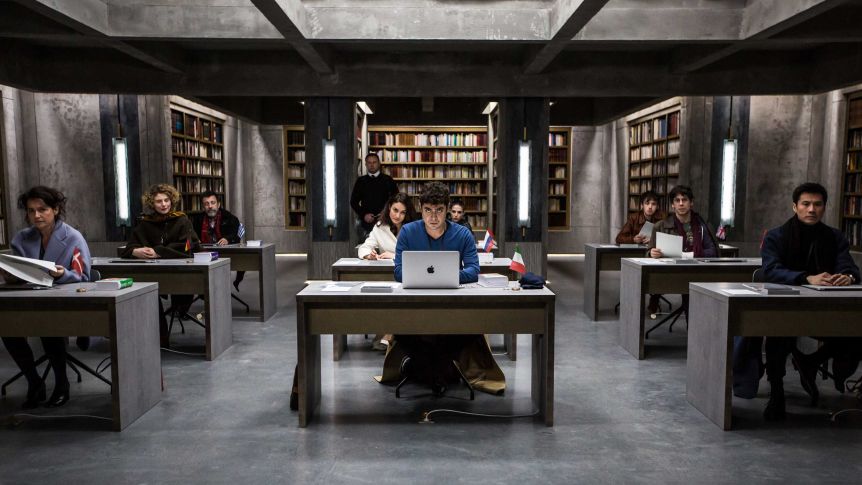
Like I said, the premise for this film is a beauty; in anticipation of the release of the final instalment of the worldwide literary phenomenon “Dedalus”, the head of Angstrom Publishing, Éric Angstrom (Lambert Wilson) recruits nine translators to translate the widely anticipated novel. For the next few months, the translators live and work in the bunker of an austere French castle owned by a Russian oligarch and translate the book into their own language. They are cut off from the rest of the world, have no access to any phones or internet to guarantee the secrecy of the story, but soon the first ten pages are released to the internet, alongside an email from an anonymous blackmailer to Angstrom threatening to release the entire book unless they receive €80 million. The thing is, the only people with access to the novel have been locked in a bunker with no internet or contact with the outside world. The translators are pinned against each other as Angstrom delivers ultimatums of increasing severity to find out who is behind the leak.

In concept, the film more or less becomes a typical “whodunnit”, Agatha Christie-esque style of story, but instead of trying to weasel out the murderer, we’re trying to find out the leaker of the book. The difference between “The Interpreters” and something like Christie’s “Death on the Nile” is that Agatha Christie never relied purely on the twists in her stories to make them work. She was a master at fleshing out fully formed characters who each are integral to the plot, each with just motive and each of whom could have reasonably been the eventual culprit. In “The Interpreters”, I would say maybe three of the characters are given any kind of back story, the rest are just background extras with no purpose at all. I was waiting for each of the translators to be assigned motives; perhaps one could have been cheated out of the publishing industry and was seeking revenge, perhaps another could have come up with the idea of the story and was furious that someone else was profiting from it. Fairly soon, instead of trying to guess which of the nine suspects are guilty, the list is whittled down to about four because none of the others are given any screen time.

The opening scenes were admittedly promising and the premise was well set up, but once the primary action of the film began, it became pretty evident that the whole thing wasn’t going to track well. When a Christie plot twist is revealed, the audience or reader tends to be amazed at its ingenuity and we often kick ourselves for not spotting the clues along the way. I’m not going to spoil the twists in “The Translators”, but they’re cop outs. They’re absolutely not consistent with the rest of the film and expose gaping plot holes so instead of marvelling at the eventual reveal, I found myself rolling my eyes instead and again feeling duped and mislead by my own excitement at what the film was going to be.

It annoys me that the filmmakers behind this probably think they’ve contributed to something unique and edgy. “The Translators” doesn’t deserve the hype it’s received, and since my trips to the cinema at the moment are limited, to waste one on a film as blatantly average as this seemed a shame.

By Jock Lehman

All About Eve

*Sunday Classics*

What a masterpiece.

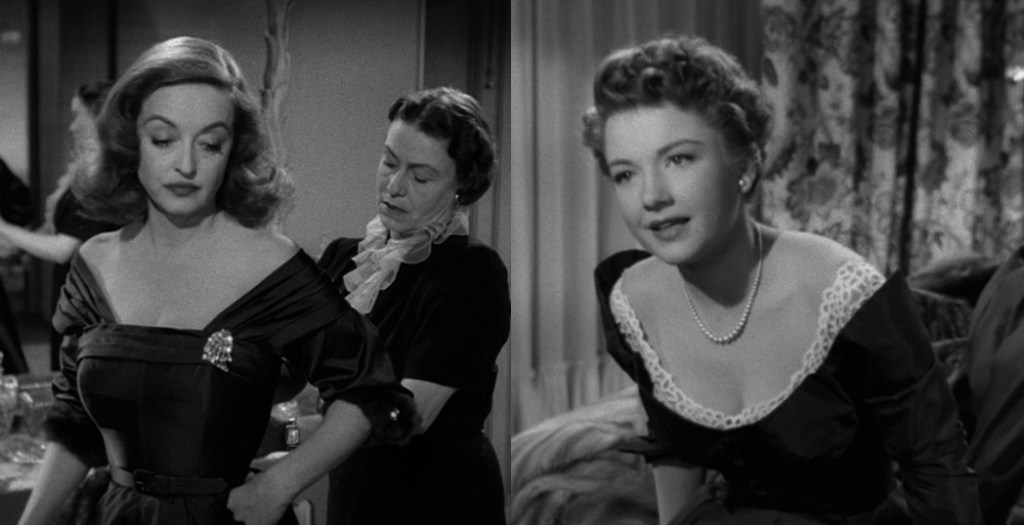
Joseph L. Mankiewicz’s 1950 film “All About Eve” is an absolute masterclass in twentieth century cinema, spearheaded by a phenomenal and career defining role by Bette Davis and a beautifully crafted script, encapsulating the magic of the Golden Age in Hollywood. There was something almost Shakespearean in the structure of this film, in fact I checked afterwards to see if it had indeed been based off one of his plays. It wasn’t, the film in fact was based on he 1946 short story “The Wisdom of Eve” by Mary Orr, although screen credit was not given for it. I still maintain though that the story itself has a timeless quality, following the demise of a central hero with a tragic flaw at the hands of a manipulative, Iago-esque figure with a litany of memorable supporting characters.

The film opens on a theatre awards night in honour of young actress Eve Harrington, with a narrator articulating her brutal and merciless route to the top and introducing each of the players she’s taken out at the shins along the way. The rest of the film is an explanation of how they all ended up there on that night. Eve Harrington (Anne Baxter), is a seemingly wide-eyed fan of the veteran theatre star Margo Channing (Bette Davis). After noticing that Eve is attending every night of Margo’s current stage production and waiting outside after every performance to catch a glimpse of her idol, Margo’s best friend Karen (Celeste Holm) is touched by Eve’s devotion and introduces her to Margo. Margo too is suckered in and gives Eve a job as her personal assistant, somewhat out of kindness and compassion for Eve’s tragic past but also undoubtedly for her own vanity and the sense of self importance that comes from allowing yourself to be treated as an idol. As the film progresses, Eve slyly and discreetly manipulates her way into the inner circles of the theatre world, all the while maintaining her facade of innocence and naivety. Margo and eventually Karen too, soon become aware of Eve’s deceptive ways while their husbands (Gary Merrill and Hugh Marlowe) stumble along completely unaware and almost comically playing into Eve’s conniving hands. By the end of the film we are back where we started, and are able to see Eve’s acceptance speech for her award through the lens of what she’s done to get there.

First and foremost, this is the pinnacle of everything that was great about Bette Davis. Davis was notoriously strong willed and larger than life in Hollywood and in a semi-biographical sense, her role as Margo mirrored her determination to not be forgotten or replaced in an industry which so highly values youth and beauty. As Margo, Davis is formidable. There is something so iconic about the timbre of her voice and the snappiness of her insults and she commands an elegant and haughty authority whenever she’s featured on screen. Margo is by no means a saintly figure; we see her drunkenly berating her guests and bitterly accosting the people closest to her out of jealousy and fear of abandonment. Because of this, despite all the glamour, dazzle and undeniable stardom, Margo is painfully relatable and we as an audience root for her despite her flaws. Davis portrays a lifelike individual, who is sad sometimes, vulnerable sometimes, bitter and jaded sometimes but also strong, loyal, fiercely funny and completely transparent – she sure doesn’t suffer fools. I laughed constantly throughout this film, a lot of the time due to Davis’ delivery of some seriously brutal one liners courtesy of Joseph L. Mankiewicz‘s screenplay.

The film is clever to start out with the narration by George Sanders, because we watch the unfolding of Eve’s manipulation with the knowledge that there’s always an ulterior motive. The film plays out very much like a theatre production, and its fun watching everything happen as an audience member knowing what we know while the main players don’t. Anne Baxter is sensational as Eve as well, because its totally conceivable how she manages to hoodwink everybody. Her wide-eyed adoration and devotion is believable and sincere, but in the scenes where she allows her mask to fall, with nothing more than a change in the expression in her eyes, she is merciless and chilling. There is a delicious sense of irony as the film comes to its close, and this is again due to Mankiewicz’ beautifully sophisticated yet simple sense of story. As Eve returns to her hotel room after the awards ceremony, she is surprised to see a young high school senior waiting for her, hoping desperately to meet her hero and in identical fashion to how Eve first encountered Margo, offers to help her and packs her trunk for Eve’s trip to Hollywood while professing her star struck adoration. Then, while Eve sits and enjoys a drink, she holds the bejewelled robe that Eve wore to the banquet in front of her and poses in front of a mirror, holding the award as if it were a crown. The story has come full circle; Eve is now the one oblivious to a younger, devious woman who is determined to make her own way to the top and will presumably fall victim to it.

The film closes on this with a poignant message; while it may seem as though Eve has triumphed over Margo and is the ultimate victor – she’s the one who returns to her hotel room, with all the fame in the world but alone and bitter, while Margo leaves with her devoted husband and her friends. Fame and glory are shallow trophies, and the end of the film makes that clear.

This was an experience, not just a film, that I’ll never forget, and am completely sincere when I say that I would consider this one of the best films I’ve ever seen. Pure movie magic.

By Jock Lehman

Cape Fear (1962)

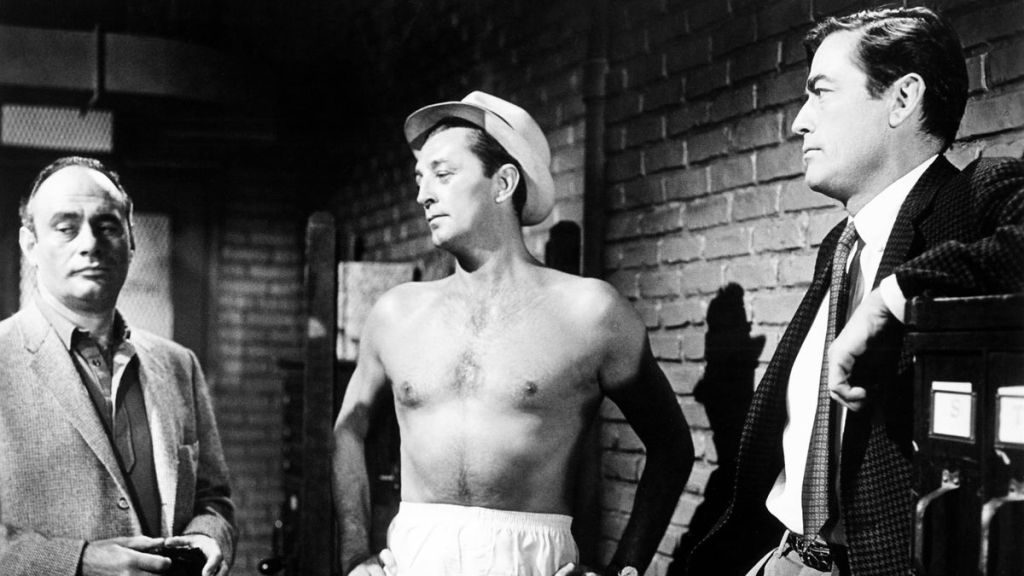
Watching J. Lee Thompson’s 1962 thriller “Cape Fear”, I kept trying to understand what it was that was lacking; there were exceptional performances throughout (in particular from Robert Mitchum as the deranged Max Cady), the score was phenomenal, there was some good moments of understandably iconic suspense, so I was confused as to why I was so damn bored. I think its sort of like if someone decided to make a cake, sourced some of the finest chocolate and richest butter but then forgotten the eggs to bind it all together. Unfortunately, this to me just wasn’t very entertaining and for stretches painfully slow, which I wasn’t expecting from such a lauded and widely referenced thriller.

The story itself makes for some real thrills, which are capitalised upon in the 1991 remake starring Robert De Niro and delivers that rare thing where the remake is actually stronger than the original. The story follows Sam Bowden (Gregory Peck) a lawyer in Southeast Georgia who had testified against degenerate Max Cady for sexually assaulting a woman and put him in prison some eight years prior. Now Cady is back and vowing revenge, discreetly stalking Bowden, his wife Peggy (Polly Bergen) and their daughter Nancy (Lori Martin) and manipulating the police system so that Bowden has no course of action against him. The progression of intimidation eventuates with Bowden fleeing with his family as he desperately tries to outwit Cady and protect his wife and daughter from a crazed psychopath who cannot be reasoned with and whose sole purpose is their pain.

The film actually starts out pretty well; the initial interactions between Cady and Bowden are tense and foreboding and there is a pervasive sense of anxiety. Mitchum as Cady is just unbelievable; there’s something animalistic and perverse in his mannerisms, despicable yet charming in the way psychopaths often are. Cady is a man in complete control, with a sadistic grin he toys with Bowden and taunts him for his own amusement. He has ample opportunity to kill Bowden and would have no remorse for doing so, he only keeps him alive to torture him and bit by bit make him feel as though he’s losing everything he loves. Strangely enough, Bowden to me is the least interesting character in the whole film; Bergen and Martin as Bowden’s wife and daughter are headstrong and dynamic depictions of women in a terrifying situation, while Peck by comparison is incredibly two dimensional and wooden.

The biggest issue I had with the film was its pacing; the sparse moments of admittedly well executed terror just aren’t enough to support the achingly long stretches in between. I understand the role that suspense plays in thrillers but it sure does wear thin in this and the intended build-up instead becomes extended periods of pretty boring cinema. Another thing is that the threat that Cady poses should have been dealt with in five minutes; Cady is stalking and threatening Bowden and his family, there’s no way the police would allow him to do this in any sane world. Because of that, I became fairly frustrated with Bowden and his police associates for being incompetent. Bowden decided that it was a good idea to take his family to an isolated swamp where nobody can come to their aid, with a brilliant killer on their case with unlimited resources at his disposal and where a dumped body would never be found. This sort of stuff really irritates me; it would have been a lot easier to sympathise with Bowden if he wasn’t such an idiot.

There’s some good stuff in here; “Cape Fear” is worth seeing for the music, Robert Mitchum as Cady and a few key scenes but I won’t be seeing it again in a hurry. And disappointingly, contrary to my expectation based on the Simpsons episode of the same name, Max Cady didn’t step on a single rake.

By Jock Lehman

High Society

*Sunday Classics*

1956’s “High Society” is sweet, innocent, bright, clean and mindless fun. As a comedy, it works sensationally well, but as far as it goes as a musical, for me it doesn’t stand up against the others coming out around that same time, not with “Singin’ In the Rain” in 1952 and “The King and I”, “Oklahoma!” and “Guys and Dolls” in 1955. The musical numbers are chirpy, and Sinatra’s singing is sublime but the songs themselves are far from memorable. In fact the only song that I can still recall the tune to is “Who Wants to be a Millionaire?” and even that’s not sensational, which disappointed me since Cole Porter wrote the music. What makes “High Society” tick are the farcical jokes, jolly old misunderstandings and the fantastically snarky rat-a-tat dialogue. And of course an unreal appearance from the incomparable Louis Armstrong.

“High Society” is a musical remaking of the 1940 classic “The Philadelphia Story” starring Katherine Hepburn, Cary Grant and James Stewart. In the lead up to her wedding to straight laced, warm cup of tea George (John Lund), beautiful socialite Tracy (Grace Kelly in her final acting role before becoming Princess of Monaco in 1956) is faced with a choice of marrying the safe and stable George, returning to her ex-husband Dexter (Cole Porter) who is still madly in love with her, and hot shot reporter Mike (Frank Sinatra) who has been sent to cover the wedding. As Tracy struggles with her heartstrings and embarks on her journey of self discovery, the film is peppered with fun supporting characters and musical interludes.

The “farce” style of theatre is a fun one to play with, and “High Society” makes us feel like we’re constantly in on the joke. When Tracy introduces her Uncle Willy as her father to Mike and his associate Liz Imbrie (Celeste Holm), we as an audience know that Uncle Willy isn’t really her father and feel included in the chaos that ensues. Beyond the farce style of the film, one thing I did notice (perhaps this is true of many films of this time), but there are significantly fewer cuts within a scene than what I’m used to. Because of this, dialogue can go for minutes at a time without a single cut, so everything is choreographed and executed as if it really were on stage. It’s a small note, but I actually enjoyed the effect it created quite a lot.

I also found the comedic banter quite impressive; I suppose because the scriptwriters were obviously somewhat restricted in what they were and weren’t allowed to say back in the 1950s, and so they really did have to get creative with some of these insults. I laughed out loud when Tracy scolded her younger sister Caroline (Lydia Reed) with this zinger – “Caroline Lord, if you put this picture in my wedding presents once more I am going to personally chain you to your bed.” Its so sweet and innocuous but also so elegantly articulated and said with such delicious venom, and the film is full of this sort of thing! In particular, photographer Liz Imbrie is as jaded and sarcastic as they come and delivers some absolute beauties.

Films like this aren’t necessarily supposed to be relatable, that’s not the point of them. This is pure escapism, where everybody is beautiful and elegant and sings and dances and the biggest dilemma faced by the characters is who out of her three eligible bachelors is Tracy going to choose to marry. While not a classic in terms of musicals, “High Society” is a genuinely funny and witty piece of comedy, something wholesome and happy and designed to distract its audience from whatever dreariness may be happening in the world.

By Jock Lehman

Tenet

I can remember once waking up in the middle of the night during an unbelievably vivid and intense dream; I woke up marveling at the plot and intricacies of my dream and made a voice recording on my phone so that I wouldn’t forget the dream and so I could contact the relevant film studios and have my dream turned into a movie. When I listened back to the audio recording I had made the next morning, it was a rambling garble on nonsensical phrases and concepts which in the harsh light of day, was nowhere near as cool and exciting as I had thought it was the night before. And for some reason I kept saying “Marmaduke”.

That’s what I think must have happened to Christopher Nolan in making his latest action flick “Tenet”; he found an idea which he was obviously enamored with and kept going further and further down more and more rabbit holes so that the original concept was barely distinguishable. The basic premise is that certain objects, for example bullets, are able to have their “entropy” inverted so that they travel backwards through time. A CIA agent known only as the “Protagonist” (John David Washington from “BlackKkKlansman”) is entrusted with the mission of tracking down who is supplying the weaponry, and ultimately discovers that not only can objects have their entropy inverted, but entire worlds too. What follows is a mess of incoherent storylines and characters which are sometimes going forwards in time and sometimes backwards, some admittedly cool action sequences, erroneous plots surrounding arms deals and blackmail which never really find their feet, and time travel twists and turns which establish boundaries in one breath and then blatantly defies them in the next.

Performance wise, they’re fine across the board, with Kenneth Branagh playing a sadistic Russian oligarch and Robert Pattison does well as a cool and seasoned spy. The biggest disappointment for me was Washington in the leading role; for some reason all the James Bond-esque dialogue and tough guy swagger just seemed stupid coming from him. I couldn’t quite figure it out, but as the film progressed he only became more annoying to me and struck me more as someone’s irritating little kid who insisted on coming to the pub with his older brother rather than a cool CIA spy on his way to save the world.

For me, this is the least impressive of Nolan’s recent blockbusters, and the most obvious parallel to draw is with 2010’s “Inception”. It too was an action packed thrill ride with a mind bending central concept which was designed to intrigue its audience with its ingenuity, but with one key difference – the universe in “Inception” was predicated by laws and rules, “Tenet” doesn’t seem to be following any at all. I know that the director would have most likely researched the shit out of the science behind the film and that if the plot is explained with mind maps and arrows that it probably all adds up, but I don’t care. If a screenwriter can’t take an original concept, especially something concerning far out scientific exploration or time travel, and express it in a way that at least reasonably digestible then they’re not doing their job properly. A big part of this I think was the fact that the dialogue was often not loud enough or clear enough to hear over the resounding explosions or gunfire, so perhaps I missed some exposition in there. Even so, it really shouldn’t have been this difficult to follow the basic plot points of an action flick.

What was disappointing to me is that the initial concept of an object’s entropy being inverted was abandoned pretty quickly once we learn that entire timelines can be inverted. I was looking forward to the Protagonist learning how to handle inverted weapons and use them against the baddies, because once the backwards world crops up, the film in many ways falls back into the same standard time travel tropes that have been explored in everything from “Back to the Future” to “Family Guy”. Once I had seen the film, I read up a bit about it and was surprised at the amount of secrecy surrounding the script; each actor allegedly only read it once, in a sealed room and weren’t allowed to talk to anybody about it. Michael Caine was only allowed to read the lines for his five minute cameo, not the rest of the script. Having seen the film, I really couldn’t understand why; the premise is cool, but I didn’t think it was groundbreaking, not in the same way as “Inception” or “Interstellar” anyway.

There are some impressive and typically Nolen-esque moments throughout; particularly a car chase in which one of the vehicles is travelling backwards and a number of backwards fights, and these are visually incredible and very exciting. But for me, these stand alone moments weren’t enough to string together what in my mind ranged from indulgent and incoherent plot points designed to be confusing rather than gratifying, and a barrage of time travel cliches which had been done to death years ago.

By Jock Lehman

12 Angry Men

*Sunday Classics*

The quiet brilliance of Sidney Lumet’s “12 Angry Men” is found both in its simplicity yet also in its intricacy. There is nothing ostentatious about the film; the appeal lies in a tight script, compelling performances and some seriously clever cinematic techniques.

The film is, in its most basic form, a gripping courtroom drama as twelve jurors discuss whether a young defendant in a criminal trial is guilty of brutally murdering his father. Only one juror, Juror No.8 (Henry Fonda) thinks there is any question of his guilt, and insists that they talk out the facts before they send him to the electric chair. One by one, the men change their verdict from guilty to not guilty, convinced that there is a reasonable doubt as to whether he committed the crime. Gradually, the tension in the film escalates and amplifies to the point of explosion over its relatively short run time; alliances are forged and broken, individual prejudices and personal vendettas are exposed. The courtroom elements of the story are fun and suspenseful as Juror No. 8 reenacts scenes from witness testimony or produces an knife identical to the supposedly unique weapon used by the murderer, and it’s deeply satisfying when the more bombastic of the jurors are put in their place by reason.

Beyond this though, the film is a showcase in different personality types, exemplified in each of the different jurors and the conflicts that arise in situations of pressure and high stress when they’re forced to work together. There is palpable tension in the room; the actors all seem on edge and exhausted, apparently the director made them run their lines for hours on end on set without filming to generate a real sense of bitter frustration. Juror No. 3 and Juror No. 7 are loud and confident, happy to dominate the other jurors, like Juror No. 2 and Juror No. 5 who are somewhat meeker and not used to confrontation.

There are a number of moments where the quieter jurors are emboldened to speak up against the other bullying figures, particularly when Juror No. 9, an elderly gentleman, firmly and calmly explains why he changed his vote and that he wouldn’t be swayed by who could yell the loudest. One of the more powerful scenes is one in which Juror 10, who up to that point had been aggressive and patronising in his interactions, finally erupts in a racist tirade about the defendant, “I’ve lived among them all my life… You can’t believe a word they say… I mean, they’re born liars…” As he flounders and gets more and more desperate to get the jurors back on his side, one by one the men stand up from their chairs and turn their backs on him. The effect is incredible; in less than twenty seconds the man has gone from one of the more dominant and influential people in the room to being reduced to a state of complete emasculation. And it’s delicious.

One of the incredible things about “12 Angry Men” is that the film takes a single setting (with a couple of momentary exceptions) and through clever staging and sophisticated camerawork, the claustrophobia and increasing intensity of the situation is amplified to match the performances. The director himself described how he “shot the first third of the movie above eye level, shot the second third at eye level and the last third from below eye level. In that way, toward the end the ceiling began to appear. Not only were the walls closing in, the ceiling was as well. The sense of increasing claustrophobia did a lot to raise the tension of the last part of the movie.” He then used a wide-angle lens for the final shot “to let us finally breathe.” It’s this attention to detail and finesse that sets this film apart. One little moment which I thought was clever was where Juror No. 4, a measured and rational figure in the ongoing discussion, asserts earlier in the film that he never sweats (despite the story being set on the most sweltering day of the year), yet when he realises that one of the key witnesses couldn’t possibly have seen who had committed the murder because she wasn’t wearing her eye-glasses, a solitary bead of sweat rolls down his forehead. It’s the sort of thing where if you blink you’d miss it, and perhaps it’s not indispensable to the story, but it’s a nice touch.

12 Angry Men” is a sensational piece of film; so multi-faceted and insightful but rounded by an organic simplicity which makes for some very slick entertainment. Beyond anything else however, the film highlights that the presumption of innocence is not something to be taken lightly, nor is the power of the lone voice in a crowded room.

By Jock Lehman

An Affair to Remember

*Sunday Classics*

Okay, chill the hell out Meg Ryan.

My only real knowledge of the legendary “An Affair to Remember” came from the plot of “Sleepless in Seattle” (apparently when the Tom Hanks and Meg Ryan flick was released in 1993, VHS sales of “An Affair to Remember” skyrocketed) and the iconic meeting on the top of the Empire State Building. I expected it to be pretty schmaltzy, but I don’t mind a bit of schmaltz, not when some of my favourite movies include “The Sound of Music”, “My Fair Lady” and the Richard Curtis rom-coms of the 90s. Schmaltz isn’t the issue here, its more that I didn’t expect one of the most famous romantic comedies of all time to be so dull, unfunny, cynical, unromantic and starring two lead characters who are, amongst other things, genuine assholes.

The film stars Cary Grant as Nicolò (Nickie) Ferrante, an internationally notorious and devilishly handsome playboy and Deborah Kerr as Terry McKay, an elegant and sharply tongued jazz singer who meet aboard a luxury cruise liner on a journey from Europe to New York. After some brief and heated flirtation on the boat and a bizarre meeting with Nickie’s grandmother in which the two women bond and Terry literally melts into Nickie’s arms, the couple (both of whom are engaged to comparatively wonderful people) decide to meet at the top of the Empire State Building in six months if they are able to leave their current relationships and are prepared to throw aside the prejudices and sneers of society in the name of love. Unfortunately, Terry is hit by a car on her way to reunite with Nickie and rushed to hospital while Nickie assumes that he’s been stood up and that she doesn’t love him anymore. Both are too proud and stubborn to confront the other until they inevitably melt into each other’s arms once he discovers the truth.

Admittedly, the initial meeting on the boat and the sneaky rendezvous’ trying to court while hiding from the prying eyes and snooty laughter of the upper class passengers is quite fun. There is some nicely choreographed slapstick comedy and some nicely barbed back and forths between Grant and Kerr, not as much as I would have expected but there are definitely some moments. Then as soon as they go and visit Nickie’s grandmother at Villefranche-sur-Mer off the Mediterranean coast, any sense of empathy I may have been developing for the couple flew right out the window. Terry’s feelings for Nickie are somehow solidified by the fact that his grandmother (who strangely is literally only about 15 years older than he is) says that he’s a good boy and that he’s a gifted painter. It just seemed so tacky and shallow; all of a sudden this guy is sensitive and sweet because his Gran says so, despite the whole world knowing he’s a womaniser and kind of a creep.

Once Nickie and Terry get to New York, things just became too ridiculous for me to suspend my disbelief even for the sake of romantic whimsy. Nickie breaks it off with his wealthy fiance, and for some reason is then is so poor that he has to start painting for a living since its the only thing he’s truly good at, but that’s alright because its honest work and he’s shaken off the shackles of the rat race. Meanwhile he’s still going to the opera with New York’s high society and his grandmother is sitting up on her French mansion complete with its own chapel, somehow I don’t think this is a destitute family and I found it hard to believe that he’s so poor now that he has to scrounge for money by painting canvases. Terry meanwhile has taken to teaching music to primary school children since her accident, and there are two genuinely unbearable and completely unnecessary scenes with her conducting a school choir filled with freckle faced misfits who I’m sure are supposed to be cute but I couldn’t help but hope that a disgruntled neighbour would come round and douse them all with a fire hose.

The whole schtick in the second act is that Terry is too proud to tell Nickie that she’s now crippled, while he of course doesn’t bother calling her to check if she’s alright because he’s been stood up. None of it made any sense! If their love was so strong that she was willing to break it off with her adoring and saintly fiance (to be honest he was probably better off, I was shocked at how poorly she treats the guy) for a man she met on a cruise liner, then surely she would trust him with the knowledge that she can’t walk anymore. Did they really not keep in touch for the six months after they had arrived back in New York? Not even for dinner or for her to sing him a jazzy tune while he paints a portrait of himself? And when he found out that it was her who had bought his painting in the final scene, I can remember actually laughing out loud at how stupid the whole thing was.

After a while I just gave in to the fact that “An Affair to Remember” wasn’t even that romantic or funny anymore, it was just stupid. The two leads are both narcissistic dickheads and I just didn’t care what happened to them, at one point I was actively hoping that they both ended up miserable and received some sort of comeuppance for screwing over everyone in their lives. For a film that has so much nostalgia and esteem surrounding it, this was a massive disappointment and I feel bad that Meg Ryan couldn’t find a movie with a better romance story for her Saturday night. Like “Ghostbusters”.

By Jock Lehman

Babyteeth

Shannon Murphy’s “Babyteeth” is sweet, heartbreaking and refreshingly relatable; somehow touching on all the teenage coming of age romance tropes without ever seeming overly honeyed or hackneyed. The characters (for the most part) are well developed, flawed and human, with an admirable and grounded leading performance by Eliza Scanlen and an especially impressive turn as her bad boy lover in Toby Wallace.

The film follows Milla (Scanlen), a strong willed Australian teenager going through the throes of cancer. Her parents Anna (Essie Davis) and Henry (Ben Mendelsohn) are supportive and undoubtedly loving even if they don’t know quite how to handle the situation, so when Milla develops a friendship with a twenty-three year old drug dealer Moses (Wallace), they go against their better judgement and let Milla pursue the relationship, if only to give her some happiness in the little time she has left.

As the central protagonist, Scanlen is incredible in her nuanced depiction of Milla and balances the teenager’s sense of naivety and innocence (she’s only 16) with her strong desire to flirt with danger and rebel. She’s angry at the cards she’s been dealt and wants to feel as much vibrancy and electricity as possible while she still can; the cinematography in this sense is quite profound, loaded with shots of colour and nature and close up shots of Milla dancing to music – as if everything she is experiencing is heightened. Her romance with Moses is actually quite sweet; she’s giddy when he returns her feelings and crushed when he doesn’t. Toby Wallace as Moses however is I think one of the biggest reasons the film works; there’s something in his eyes which is quite haunting, as if they’re far too old for his face. Though Milla looks to him as older and dangerous, from a different and exciting world to the one she knows, he’s still only just a boy himself and in letting himself love her, has exposed himself to the hurt and pain that he’s taught himself to block out. He inhabits the character totally and completely, everything from his walk to his posture and the tone in his voice is so authentic that I genuinely thought that Wallace had been plucked from the rougher streets of Sydney specifically for this role.

What Murphy does exceptionally well is that while the story is centered around Milla, the film goes into great depth on how her illness is impacting on the surrounding individuals in her life. Milla’s parents aren’t just secondary blips in the story designed to be stuffy and overbearing to make her by comparison even quirkier and more free-spirited. Davis and Mendelsohn are real veterans of Australian film and television and have unmistakable chemistry; neither of them are properly prepared in how to parent Milla as she grows sicker and sicker, they love her and want what’s best for her, even as their marriage (as so often happens in these circumstances) suffers under the weight of it all. This film, more than any other I’ve seen in a while actually, made me believe that the parents here had actually developed over time and had a past and really are just grown up kids trying to figure things out themselves.

Essie Davis especially has some stand out moments throughout the film, notably in a beautiful scene where she buys Milla’s Year 10 formal dress, and you can see the palpable joy in her face as she’s able to share something, even just for a moment, that is sweet and innocent and mercifully normal. Then again in one of the film’s closing scenes, Davis bears the entirety of Anna’s grief and anger and exhaustion in one seriously powerful confrontation in which her cries go beyond human despair and touch something almost animalistic. I liked Henry’s character as well, although I think the writers had a harder time figuring him out and there’s a bizarre flirtation with a crass, pregnant neighbour which made no sense to me whatsoever.

While “Babyteeth” is not perfect, every emotional response feels earned, the characters and their interactions feel genuine and most importantly, I felt like the film portrayed a volatile subject matter with sensitivity and in a way which in my mind, actually fairly accurately represented how the people struck by it would have reacted. Its a sweet, albeit well-trodden story; I laughed, cried and found myself feeling quietly proud of the Australian team that produced such a beautifully authentic insight into grief, death, family and love.

By Jock Lehman

Rear Window

*SUNDAY CLASSICS*

Alfred Hitchcock’s “Rear Window” places us as the audience in the same seat as the film’s protagonist; we see things from his perspective, we learn as he learns and draw inferences (whether they be right or wrong) as he does the same. We feel his boredom turn to curiosity turn gradually to suspicion and ultimately fear as if we were sitting in that wheelchair with the binoculars ourselves.

Cynical photographer L. B. “Jeff” Jefferies (James Stewart) is recuperating from a broken leg and spends his time sitting by his open window watching his neighbours in the opposite apartments to quell the boredom. His only regular visitors are his beautiful and glamorous girlfriend Lisa (Grace Kelly) who is wanting their relationship to progress but he is reluctant to do so, and his insurance appointed and wise-cracking nurse Stella (Thelma Ritter) who visits every morning for a massage and to bust his balls a little. He becomes familiar with the lives of his neighbours since they all have their windows open during a brutal heat wave and comes up with names for each of them; there’s Miss Torso (a young beautiful dancer who hosts numerous suitors), Miss Lonely Heart (a middle aged spinster who holds imaginary dinner dates at her kitchen table) a number of married couples of varying degrees of happiness and a zany older woman who enjoys pottery. One couple which Jeff has been keeping an eye on is Thorvald (Raymond Burr), and his bedridden wife who seems to scorn and ridicule Thorvald. One night Jeff hears a loud scream and a crash, the next morning Thorvald’s wife is nowhere to be seen and over the course of the following days Jeff convinces himself that Thorvald has murdered his wife. After finally convincing Lisa and Stella of his theory, Jeff is determined to gather enough evidence to prove Thorvald guilty, all the while being stuck with his leg in a cast and without being caught.

One thing which really struck me in this film was the ingenious production design; the apartment buildings with their various occupants were built specifically for the film and as the camera pans over each window, we catch glimpses into their worlds. These little moments are beautifully handled; from Jeff’s window we witness the heartbreak, joy, loneliness and rage of these people at their most vulnerable and unpretentious. Hitchcock allegedly worked from Jeff’s apartment with James Stewart, all the other actors were all fitted with flesh-coloured ear pieces so that he could issue direction and their movements were in time with the speed of the camera. It was just so unlike anything else I had seen in a film before, much more in keeping with a theatre production than a motion picture and an incredibly clever way in which to ensure that we only ever see whatever Jeff sees from his chair. It’s as much our journey as it is his.

As far as thrillers go, this is a slow burner; intricate and creeping before the explosive and thoroughly well-earned final act. We slowly and steadily build the case with Jeff that Thorvald has killed his wife but what is so brilliant about Hitchcock’s direction is that there’s always the possibility that Thorvald is innocent. Nothing that Jeff witnesses is iron-clad proof; everything we’ve seen Thorvald do could have had an explanation and its perfectly possible that the conclusions we’ve jumped to were as a result of watching through Jeff’s paranoid lens. Though Jeff is the hero of the film, he’s not necessarily a good or moral man; his obsession with Thorvald and his wife isn’t so much to bring him to justice but to satisfy his own curiosity.

As for the performances, I don’t suppose there’s anything that remarkable about these characters and the actors are therefore more of a tool to funnel the story. Each of the core cast are enjoyable, particularly Grace Kelly – surely there’s never been anybody as glamorous, elegant and beautifully spoken as she was in her heyday, she is the quintessential Hollywood movie star and steals any scene purely by being in it. James Stewart is fun as Jeff, he suits the jaded old bachelor type well and delivers clever quips with undeniable charm. One thing that irked me just a little bit was how much time was spent on Jeff and Lisa’s relationship and the fact that he couldn’t see her surviving in his world. It’s not that it wasn’t well done or inorganic for the characters or anything, its more that I felt it diverted from the crux of the story and could have been done without.

There’s something quite spellbinding about 1954’s “Rear Window”; this is admittedly my first Hitchcock but the direction is undeniably unique and makes for not just an entertaining thriller but also a lovingly and expertly crafted masterpiece which explores the lives we lead when we think nobody else is watching.

By Jock Lehman