Rocky

*SUNDAY CLASSICS*

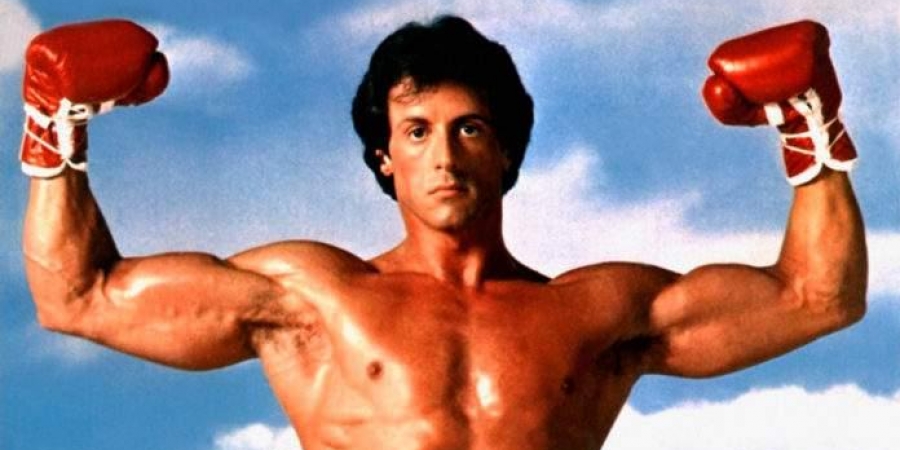
There are certain films where the story is so rich and compelling that the performances are merely catalysts for the plot and it doesn’t matter if the actors are remarkable or not (I noted this in last year’s 1917). “Rocky” definitely isn’t one of those movies; the story here is as old as the hills and rests entirely on the unbelievably raw and iconic performances of Sylvester Stallone as Rocky and, without exception, surely what must be one of the stronger supporting casts in cinematic history.

Sylvester Stallone was famously offered $350,000 for the rights to the script, so long as an established Hollywood leading man play the titular role. He had $106 in his bank account and at the time was trying to sell his dog because he couldn’t afford to feed him, but was still adamant that he star in the film. Had Stallone not played Rocky, I think this film would have been forgotten six months after it came out. Instead, Stallone made what really should have been a mediocre action flick into something much more special. What makes Rocky so involving is the fact that the central crux of the story (Rocky being approached by Apollo Creed (Carl Weathers) with an offer to fight for a chance at the heavyweight champion title) probably doesn’t even come up until about half way through the film. Instead, director John G. Avildsen takes his time with slowly establishing Rocky as a character until we know him inside out; his walk, the way he talks to himself and to his pet turtles, how he walks past the local pet store every morning and night with a new joke to impress the quiet shop assistant Adrian (Talia Shire), how he’s kind hearted but angry when mistreated and disappointed in himself for the opportunities he’s squandered by drinking and “screwing around”. The dialogue, particularly Rocky’s, is absolutely inspired; its not driven by meandering plot points or exposition but by what these people would actually say in this little corner of the world.

One of the best pieces of scriptwriting in the whole thing comes from a pretty brutal scene in which Rocky and his girlfriend Adrian are sitting watching T.V. when Adrian’s brother and Rocky’s friend Paulie (Burt Young) comes home and begins bashing up the living room with a baseball bat, drunkenly accusing Rocky of forgetting and abandoning him, while blaming Adrian for him never marrying or succeeding in life. Adrian finally snaps back at him, (Talia Shire as Adrian is particularly powerful) and her whole facade of mousiness and timidness is smashed to a thousand pieces – “I take care of you Paulie, I don’t owe you nothing! And you made me feel like a loser Paulie! I’m not a loser!” If anything sums up why “Rocky” received Best Picture, its this scene. There is a poetic and raw quality to “Rocky” which is particularly memorable, and something which I wasn’t anticipating.

Then of course is the sporting element of the film; its understandable why the training montages and those shots of Rocky running up the Philadelphia Museum of Art steps are so iconic. There’s no sugar coating of any of this, you can see the pain and the sweat Rocky puts into his training and by the time of the boxing match you feel and wince with every single blow. Apollo Creed was never intended as a villain, and he’s not. Its just that we’ve grown to love Rocky so damn much over the course of the previous 110 minutes that we want him to succeed. And yet when Creed is declared the winner of the match, (surely this can’t be a spoiler by now) it doesn’t even matter because we’re so proud of Rocky for getting up every single time he was knocked down and for standing there battered and bruised against the heavyweight champion of the world. All that matters is that he completed what he set out to do, he got the girl and that he’s done something he can be truly proud of.

I haven’t rooted for a character in a film nearly as much as I did for Rocky Balboa. “Rocky” taps into every possible emotion I could have experienced while watching a film; I laughed, I was inspired, I felt sad for the wretchedness of some of the characters and proud when they overcame adversity. Stallone brings to life a flawed, insecure, hot-tempered but kind hearted and tough man who embodies everything that personifies a true Hollywood hero. And I loved every minute of it.

By Jock Lehman

The King of Staten Island

Judd Apatow’s latest venture probably isn’t his funniest or most memorable but it sure is packed with that trademark heart and reinforces the fact that even an average Apatow flick is still yards above Hollywood’s average summer blockbuster. Apatow films are known as being funny, sweet and long – in my mind “The King of Staten Island” lives up to two of the three.

The star of “The King of Staten Island” is Pete Davidson from Saturday Night Live whose father was a firefighter killed during the 9/11 terrorist attacks, and the film’s central premise is based loosely off this. Davidson plays 24 year old Scott Carlin, an aimless young guy whose firefighter Dad was killed when he was 7 and has grown up never really resolving his loss and emotionally distancing himself from anybody who tries to get close to him. Scott is unemployed, lives with his long suffering Mum (Marissa Tomei) and sister Claire (Judd Appatow’s daughter Maude) and only really dreams of becoming a tattoo artist while in the meantime getting stoned with his bum mates. When Scott’s Mum starts dating local fireman Ray (Bill Burr), he is forced to confront the loss of his Dad and recognise that it wouldn’t be dishonouring his memory for him to be happy.

Davidson is actually a surprisingly good lead – he’s essentially playing himself (the real Pete Davidson has struggled with mental health issues of his own) but has good comic timing and is pretty endearing for a character which on paper shouldn’t really be that interesting. I’m not sure if this is going to be a springboard for Davidson as an actor into other films; Lady Gaga was sensational playing a version of herself in last year’s “A Star is Born” but that doesn’t in itself lend to her versatility as an actress. Regardless, Davidson more than holds his own here and gives probably the best performance in the entire thing. It’s not that the supporting cast isn’t commendable, they all do pretty well (Bill Burr as Ray and Bel Powley as Scott’s love interest are particularly likable and couldn’t be more New-Yorker if they tried) its just that they’re not given too many hilarious things to say or do. The film is fairly funny throughout but I definitely won’t be quoting it with my mates like I would for “Knocked Up” for instance – Ray is kind of funny when he tells Scott that there’s no way he’d drown in a backyard pool because he’s 8 feet fucking tall, but he’s no McLovin.

Where the film really excels is in the sentimental stuff; I initially thought that Scott’s sense of identity and purpose would come from his hanging out with Ray’s two little kids and that he would undertake responsibility that way, but I liked that it ended up coming from Scott’s Dad’s firefighter buddies. How it all plays out is a little simplistic but then again it’s a simple enough message; the firemen teach Scott the inherent value of hard work, personal responsibility and sacrifice in amongst drunken bar sing-alongs and a series of early morning wake ups with the fire hose.

They reinforce to him that everybody goes through hardship and the sign of true character is not to wallow in self-pity but to rise above adversity and make the most of what life has to offer. It’s a theme which is alluded to earlier in the film too, there’s a nice scene between Scott and Claire before she goes off to college where she tells him that just because their Dad died doesn’t give him an excuse to wallow in it and throw the rest of his life away. Some of the heartfelt conversations between Scott and his Dad’s fire buddies are a little heavy handed but they’re still kind of sweet. Its a nice moment in particular when Scott’s told about how his Dad used to do coke and get up to mischief; he had always been told how much of a hero he was, but this was the first he had ever heard of his Dad being funny and flawed and human, just like Scott.

I ended up liking this movie quite a bit. It’s still not one of my favourite Apatow flicks, (although it is an admittedly high bar to breach), but I like that Davidson’s story and the memory of his Dad have been honoured. While I did miss the biting dialogue and sensational supporting characters that made “The Forty Year Old Virgin” and “Superbad” such iconic and unique properties, I still had a good time with this and found the film’s underlying message to be quite a beautiful one.

By Jock Lehman

The Personal History of David Copperfield

There’s a lot to like about Armando Iannucci’s interpretation of Charles Dickens’ “The Personal History of David Copperfield”; it’s well executed, bright, colorful, optimistic, often very funny and delightfully whimsical. But to me the film misses out on a lot of the societal satire and the famously grisly elements of Dickens’ work that made him so iconic. This felt much more like an adaptation of something by Jane Austen or Louisa May Alcott – perfectly pleasant and sweet and featuring some aggressively decadent upholstery but to me seemed a strange interpretation of the source material.

The film chronicles the eventful and fascinating life of David Copperfield (Dev Patel) through his own narration, and all the zany people he encounters along the way, from living by the seaside with his maid Peggoty’s family (Daisy May Cooper) to his mother marrying the cruel and cold-hearted Mr Murdstone (Darren Boyd) who sends him to work in a London factory. David lives as a young man with the kooky Mr. Micawber (Peter Capaldi) and his misfit family who are constantly running from creditors and later finds refuge with his Aunt Trotwood (Tilda Swinton) and her cousin, the eccentric Mr Dick (Hugh Laurie). David is sent to school by his aunt and lodges with the well meaning but aging and alcoholic Mr Wickfield (Benedict Wong), his beautiful daughter Agnes (Rosalind Eleazar) but also Mr Wickfield’s conniving and deceitful clerk Uriah Heep (Ben Whishaw). David eventually succeeds in his dream of becoming a writer, and the story closes with him a happy man, grateful for all the many people who have shaped him along the way.

There’s a lot going on here (the book itself is about 600 pages long) so it was never going to be an easy task condensing it all into a single film. That being said, I think the team here has actually done a pretty decent job in paying respect to the various settings and plotlines and ensuring that each of David Copperfield’s worlds are fully formed and unique. Tilda Swinton and Peter Capaldi are particularly fun as David’s great aunt and his creditor dodging guardian respectively, and Rosalind Eleazar is elegant and charming as Agnes Wickfield. The dialogue is funny, fresh and sharp (notably quite modern but I think it works well here) and the performances throughout are impressive (I wasn’t overly impressed with Dev Patel but I’ve never really thought he was that striking as an actor anyway). The storytelling devices and special effects used throughout are actually pretty incredible and add to the whimsical and fantastical element of the film, my favourite being a giant hand ripping the roof of a house to reveal that the house is actually a paper toy.

Where I didn’t necessarily agree with Iannucci’s creative spin was his interpretation of many of the characters themselves and the overall tone of the film, which is sweet and bright to the point of cloying. Dickens was so famous for his villains and for his scathing satire of the plights of Victorian England, particularly the terrible conditions of child labourers and class inequalities. I didn’t see any of this in this film, in fact Copperfield’s time in his step father’s factory and his experience living in supposed poverty with Mr. Micawber seems like a good bit of fun while the supposed bad guys (Mr Murdstone, his sister and Uriah Heep) are barely lukewarm depictions of how wretched, miserable and blatantly cruel their characters could have been.

Throughout his many experiences and various homes, David is called by a number of different names; “Master Copperfield” by Peggoty and her family, “Trot” by his aunt and Mr Dick, “Davy” by his mother, “Mister Copperfield” by Uriah Heep and Daisy by his friend James Steerforth (Aneurin Barnard). The message here is that David adapts to his environment in order to survive and sacrifices some of his own identity, but I didn’t really see any evidence of this changing persona from Dev Patel’s performance. There is a noticeable lack of a character arc for David, and that adds to the sense that his eventual happiness and success is never really earned and that he doesn’t seem to grow or learn as the story progresses.

I think that’s my issue with it, the film is all treacle with nothing to cut through it; I would have been a whole lot happier that everything works out for David Copperfield if his entire life hadn’t have seemed like one long, butterfly-filled romp. None of it really seemed, well, very “Dickensian” at all.

By Jock Lehman

Eurovision Song Contest: The Story of Fire Saga

This was a very confusing experience; I was somehow disappointed yet pleasantly surprised, let down by what should have been the film’s strengths and genuinely touched by what really ought to have been the film’s B plot. “Eurovision Song Contest: The Story of Fire Saga” should have been in the same league as 2007’s “Blades of Glory” or even 2016’s “Popstar: Never Stop Stopping” considering the subject matter. The annual Eurovision song contest is prime fodder for parody, and save for a couple of ingenious moments, I think that the film played it way too safe and missed out on what really should have been a comedic slam dunk. Strangely enough, the whole thing actually works better on an emotional level; its quite sweet in many ways (largely due to Rachel McAdams’ turn as the female lead, some seriously impressive musical numbers and a touching sentiment of love for one’s homeland).

Plot wise, this follows in the same vein as “Blades of Glory” or “Pitch Perfect” – Icelandic friends Lars Erickssong (Will Ferrell) and Sigrit Ericksdóttir (Rachel McAdams) have dreamed of competing in the Eurovision song contest since they were children. They call themselves “Fire Saga” and the film opens with a sensational and ridiculous music video of them both performing their original “Volcano Man” dressed as Vikings and metallic make up while running through an ice filled landscape. Unfortunately reality calls and “Volcano Man” is really only being performed in Lars’ very handsome father’s (Pearce Brosnan) basement and “Fire Saga” is a long running joke in their home town of Húsavík. Fate however, has other ideas in store, and soon “Fire Saga” is representing Iceland in the annual Eurovision Song Contest! Lars and Sigrit have to navigate between ambition and their feelings for each other, while Iceland looks on with bated breath.

The thing is, Eurovision is so bonkers already that it shouldn’t have been difficult to take the piss out of it, yet somehow there are entire stretches of the film without any real laughs at all and very few “Eurovision-centric” jokes at all. How could it be that the actual Eurovision contest itself seems like more of a spoof of itself than this was? The Russian villain who is seeking to sabotage Fire Saga (Dan Stevens) isn’t really that villainous, funny or necessary, the supporting cast was largely forgettable where they should have been larger than life and even the scene when Lars shoves a sock down his leotard seemed only a fraction of the gag it could have been. There are a couple of slapstick mishaps mid performance which are kind of funny I guess, but it almost seemed like the film actively avoids making fun of this world and along the way has lost a lot of the zaniness and outrageousness which makes Eurovision so iconic. This is of course except for the opening “Volcano Man” scene which is inspired and exactly the sort of thing I was excited about and the sort of thing they should have done more of.

However, where the film lacks in laughs it more than makes up for in heart which I was not expecting in the slightest. Rachel McAdams in particular is so charming and endearing as Sigrit, and since Ferrell isn’t really that funny here, she outshines him by quite a bit. In the film’s requisite big number where they throw out the commercialised pop song they had prepared and Sigrit sings her own ballad about their home town, I was genuinely spellbound. There’s a particularly beautiful moment where she breaks convention to sing in Icelandic and the reaction of their friends at home and the Icelandic Eurovision representatives brought me to tears. There aren’t many films that I’ve seen recently which evoke a sense of pride in one’s country or homeland and it was actually really moving.

This was unexpected in so many ways – I didn’t laugh nearly as much as I thought I would, but then again I also didn’t suspect something with Will Ferrell in a spangled Viking costume to be so touching. It’s not the film I had sat down to watch and its definitely not one of Will Ferrell’s best, but its nevertheless endearing and warm in a way that “Step Brothers” or “Talladega Nights” never could have been.

By Jock Lehman

Forgotten

I don’t have a huge amount of experience with Korean cinema, I’ve probably only seen a handful of films but 2020’s “Parasite” was a good example of how unique and interesting the style is so I’m excited to see what’s out there. The Korean films I’ve seen have all been psychological roller-coasters told with a uniquely grim sense of humour, a dark and gritty cynical perspective on society, the family unit and have all delivered a stellar twist in the final act. Interestingly though, none of the films I’ve seen have truly delivered in properly wrapping up the story, often abandoning the subtlety and slick operation of the rest of the film and either opting for a more conventional and less interesting conclusion or, in the case of Jang Hang-jun’s 2017 mystery thriller “Forgotten”, clunkily inserting so many twists and turns that the ingenuity of the central premise is ultimately overshadowed.

As I said, “Forgotten” really is an original and intriguing story; 21 year old Jin-seok (Kang Ha-neul) and his happy family have just moved into their new home when his brother Yoo-seok (Kim Mu-yeol) is abducted and returns a couple of weeks later. Although Jin-seok is overjoyed to see his brother again, he starts to notice him acting strangely and questions whether it is in fact his brother who has returned to the family. I can’t really tell more than that without spoiling the twist (one of many), but rest assured that it’ll come out of absolute nowhere and you may need a stiff drink before hitting play again.

The building of suspense in this film is phenomenal, using fairly traditional motifs (the fear of the forbidden locked door, the dark of the night and creaking floorboards) and the slick direction creates a definite sense of unease as we the audience begin to notice the strange happenings alongside Jin-seok. There’s just the right balance of portraying Jin-seok as paranoid while at the same time depicting the family as strange and creepy enough for there to be a conflict as to whether Jin-seok is indeed delusional or whether his fears are warranted. The gradual shift in tone from the idyllic and romantacised family dynamic to something more sinister is subtle and almost unnoticeable, all of a sudden I found myself in the middle of a full on thriller and hadn’t realised.

The issue for me with this film is that it didn’t know when to stop. There is one almighty twist which hits you like a sledgehammer and then the film takes a little while to explain why everything we had accepted as reality wasn’t so. Had the film ended there then it would have left me satisfied and still reeling from the ingenuity of the central premise. Instead, the filmmaker doubles down and piles on so many contrived and soap opera-esque plot devices that by the end I was more confused and exasperated than impressed.

“Forgotten” is definitely worth watching; this is a style of thriller which is a fun and interesting diversion from what I’ve become accustomed to in the genre, but gee whiz its a shame about that ending. Had Jang Hang-jun been able to wrap this up without trying to tie up every single loose strand of a plot point and even perhaps left us wondering a little, this would have been pretty close to sensational.

By Jock Lehman

Misery

Misery - My First Time Film Review

Oooh baby is this a goodie.

Rob Reiner’s “Misery” is one of those movies that I’m more than happy to revisit by myself, but have also watched a number of times with people who haven’t seen it before just to see their reactions (and not just for THAT sledgehammer scene). As far as thrillers go, this is definitely up there as one of my favourites, and probably one of the best examples of how a simple idea, well executed, can be just as effective, powerful and terrifying as something like “Se7en” with all its twists and turns.

“Misery” is based off the Stephen King novel of the same name and he’s gone on record saying that Rob Reiner’s interpretation is one of his favourite renditions of his work from page to screen. I still get chills watching this, and the story goes that this is based off fan mail that King received himself as a successful writer. Popular pulp writer Paul Sheldon (James Caan) has grown tired of pumping out sappy eighteenth century romance novels starring his heroine “Misery” and heads up to the snowy wilderness of Colorado to finish his new book. On his way home, his car skids off the icy roads and crashes, leaving him for dead, but luckily for him he’s rescued by local nurse Annie Wilks (Kathy Bates) and wakes up in her house with his legs in casts, the phone lines down and the roads blocked. Annie Wilks is Sheldon’s Number One Fan, and is exceedingly resourceful, doting and sweet albeit a little strange and old fashioned in her speech and garb.

Once Annie reads the latest Misery novel and discovers that her beloved heroine has been killed off, her honeyed humdrum manner dissolves into psychotic and murderous obsession. Once Annie’s true colours have been exposed, Sheldon is kept as her captive to write another novel, one where Misery lives on while the rest of the world, which in this film comprises largely of the local sheriff (Richard Farnsworth), his wife (Frances Sternhagen) and his agent (Lauren Becall), think that Sheldon is dead.

The film understandably turns on Kathy Bates’ performance, and she’s undeniably sensational and completely deserving of her Best Actress Oscar. As intense and terrifying the character of Annie Wilks is, Bates’ interpretation is still somehow believable. An important element of this is the character’s genuine belief that she is righteous and just in her madness and that she’s doing it all for Sheldon’s own good. Annie doesn’t see anything strange or wrong in keeping Sheldon captive, she’s the only one who truly understands his genius and while it may seem harsh, its really for the benefit of mankind and she is thereby justified in doing so. Bates does extraordinarily well in transitioning from sweet and doe eyed to monstrous and then back again within mere seconds and it’s fun watching because there’s no indication of when she may turn and this keeps the tension constant and permeating throughout their scenes together.

James Caan’s performance is interesting here, because although his role is arguably as the central protagonist, he has adopted a very subdued manner – reacting with stunned restraint to Annie’s outbursts. This makes sense to me; Kathy Bates has the more interesting and memorable character and had Caan tried to match that then the tone of the film would have felt inconsistent and disingenuous.

What is unique about “Misery” is that it has taken Stephen King’s capacity to find the horror in the ordinary and mundane, and delivered a film which so supremely terrifying because it is so steeply rooted in the rules and confines of the real world that we as an audience could actually imagine this kind of monster existing and this kind of thing happening.

By Jock Lehman

Moneyball

Brad Pitt Reveals What He, Sony Did to Save 'Moneyball ...

It’s a real accomplishment when a film is able to hook an audience while depicting a very specific and potentially alienating subject matter. I have no real interest or knowledge in American baseball, and was nervous that I wouldn’t be able to understand the world or empathise with the characters. In the hands of a lesser director this could have easily happened, but Miller has managed to create a gritty and enthralling experience which had me genuinely hooked. “Moneyball” is based on the true story of the Oakland Athletics baseball team and Billy Beane (Brad Pitt) who, alongside young Yale economics graduate Peter Brand (Jonah Hill) compiled a new team following the loss at the world series and the team’s best three players being bought out by bigger, richer teams. The selection of this new team is based on selecting players with a statistical, saber-metric approach which flew in the face of traditional scouting methods and inevitably leading Oakland to their record breaking and historic 20 game winning streak and changing the landscape of baseball forever.

The tension and excitement of this film doesn’t come from, as I anticipated, lengthy and intense baseball matches where the audience can participate in the natural atmosphere generated by the crowds and the intensity that accompanies professional sport. Instead, the film is charged by the sharp and biting conversations that occur largely in the pokey offices of the general managers and scouts rather than the stadiums, the ingenious screenplay coming from screenwriters Aaron Sorkin and Steven Zaillian. The game of baseball isn’t even a primary character in this film; its portrayed the way the scouts and managers see it, as a business – the players aren’t selected for their talent or as individuals, but rather as commodities chosen purely by algorithms.

Brad Pitt and Jonah Hill are an unlikely but surprisingly likeable duo and have sterling chemistry on screen, again in a completely different manner to what I was expecting. Pitt has been cast well as Billy Beane, he is bitter and determined to outrun the failures of his past, and there were some interesting moments where Beane questions his successes and what they really mean. Pitt plays Beane in a way which I initially perceived as detached and somewhat one-noted, but I think this was intentional; Beane is a talent scout, and as such his entire life is about concealing his emotions and making tough decisions isolated from raw human connection. I usually don’t enjoy cutesie family stuff in movies like this, but the scenes with his daughter (Kerris Dorsey) are actually handled fairly well and I think allowed for Pitt to showcase some vulnerability and highlights the complexity with which he portrays Beane in the rest of the film. And as for Jonah Hill, this was the understated and intelligent performance which he needed to propel himself out of his “Superbad” type casting and establish himself as a seriously impressive dramatic actor. He has some funny moments throughout the film, but they’re subtle and quietly delivered rather than in Hill’s typical loud and brash style. There are also some genuinely touching moments between the two leads; the two men aren’t quite friends, but its obvious that they care for and respect each other, and Jonah does well in one of the final scenes demonstrating that.

I do think there were some missed opportunities though, particularly with regard to the supporting actors – Phillip Seymour Hoffman, Robin Wright and Chris Pratt comprise some of the star studded cast and I felt like they were largely wasted, Hoffman in particular. I was also a little disappointed that the film decided to showcase the new team’s road to success through a montage of Beane and Brand coaching the players and hi-5ing their way to the team beginning to win ball games. If these players were chosen based purely on statistics, why do they need to be polished and honed on their technique to a perky pop number for the team to actually succeed?

Bennet Miller’s “Moneyball” is all about defying convention and undertaking unorthodox practices in the pursuit of greatness. In a strange way, the true story of Billy Beane and the Oakland Athletics baseball team reflects the unique nature of the film as a property itself; the performances are understated and seem to play against the actor’s calling cards, the plot doesn’t follow the typical sporting team movie ebbs and flows, the central characters aren’t the players on the team but the general managers behind the scenes, and most strangely of all, Miller has been able to turn a film which is essentially about statistics and projections into something which is genuinely electrifying.

By Jock Lehman

A Knight’s Tale

There’s something very endearing about these kinds of movies; Brian Helgeland’s “A Knight’s Tale” is sweet, innocent and uncomplicated – goodies are goodies and baddies are baddies, medieval England is fun and clean where everybody has great teeth and no smallpox in sight! This was the kind of movie I can remember as a kid being played for 7:30 on a Saturday night after “Funniest Home Videos” and though it would be very easy to poke holes in this, I couldn’t help but be swept up in the fun of it all.

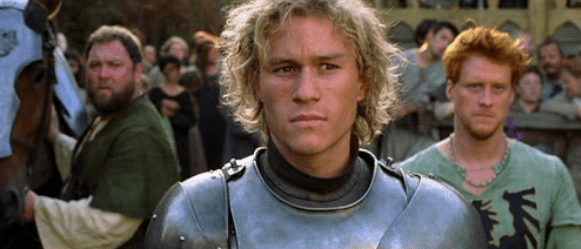
Hunky peasant William (Heath Ledger) poses as a knight and escalates to the status of celebrity through the jousting world and wins over the beautiful, haughty and oppressed princess Jocelyn (Shannyn Sossamon) along the way. This is the first time I’ve ever actually seen “A Knight’s Tale”, and wasn’t expecting for it to be as funny as it was! I laughed a lot during this, much of the comedy coming from the banter and ribbing within William’s jousting possy, (Alan Tudyk as Wat, Mark Addy as Roland and Paul Bettany as Geoffrey respectively). I don’t know what exactly tickled me about the zingers in this movie, what was it about Wat sassing somebody with “It’s called a lance. Hello?” that made me roll around with laughter? It’s not exactly the wittiest or zaniest line they could have come up with, and in another film I might have rolled my eyes at it, but for some reason the little flaws and imperfections in “A Knight’s Tale” only seem to make it all the more endearing! I think its because at its core, this film is so well intentioned and cheerful and it looks like everybody involved is having such a good time that its rough edges and inconsistencies don’t really detract from the material in any sense.

Beyond the comedy, “A Knight’s Tale” is genuinely exciting! You can’t get much more thrilling than knights pelting at each other with jousts on horseback and sword fights, and the film does well capturing the atmosphere of the crowds (while providing a fairly clean and polished depiction of the sport, notably absent of much excess blood or broken bones). I wasn’t crazy about all the romantic stuff, and I thought at times the romance between the two leads was distracting and a little annoying but I guess that all the jousting and sword fighting had to have a drop of treacle to fill in the gaps.

The film isn’t aiming to be a realistic and gritty portrayal of medieval times, the dialogue being pretty modern and characteristic of the 20th century while the fellas are hanging out and then all of a sudden extraordinarily Elizabethan when William and Jocelyn are spouting poetry to each other. And yes of course Jocelyn probably wouldn’t have had access to fluro hair dye and its unlikely that the crowds clapped along to “We Will Rock You” but it would be pretty damn miserable and petty to call out such things when its obvious from the beginning that the filmmakers aren’t angling for dreary realism. In fact the soundtrack worked surprisingly well! It would have been hard to recreate the excitement and atmosphere of the bloodthirsty stadiums with traditional Renaissance lutes so 90s rock did the trick perfectly.

And what a villain! Rufus Sewell plays the despicable and smug Count Adhemar, who is William’s antagonist and is not only threatening to rob him of his championship but also of his lover! I’ve spoken before about the value in films allowing the hero to get in a decent revenge moment to the villain, and “A Knight’s Tale” doesn’t hold back in the slightest.

This was good old fashioned fun, and I had a ripper time. It’s hard to be cynical while watching something that’s so jolly, and it was easy to watch “A Knight’s Tale” with the eyes of my twelve year old self and picture what my own jousting shield would have looked like.

By Jock Lehman

Million Dollar Baby

What the hell am I missing here!

Having watched Clint Eastwood’s “Million Dollar Baby”, and then reading some of the countless glowing reviews, Top Ten of All Time lists and tributes with titles like “Movies that inspired me out of my coma” , I’m convinced that I mustn’t have seen the same film. This was nauseating. Everything about this film was a disappointment and I genuinely sat with my mouth agape trying to understand how anybody could not actively dislike it, let alone consider it worthy as a “Best Picture” Oscar winner.

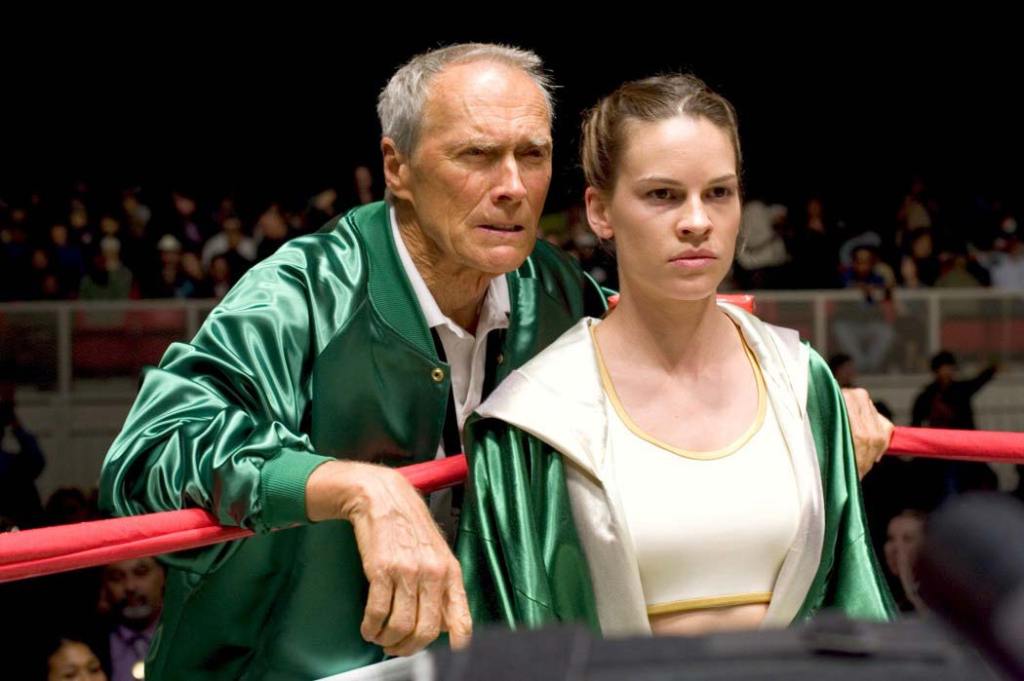
The story itself isn’t the issue, there are plenty of wonderful films that have followed the same sort of formula; a slow talking underdog named Maggie (but don’t be fooled, she ain’t no fool) who has had to struggle through everything in life (Hillary Swank) starts training at a run-down gym run by miserable, bitter, boxing trainer Frankie Dunn (Clint Eastwood playing Clint Eastwood), and pleads for him to train her, despite the fact that she’s never had proper training before and she’s too old and that she’s got the whole world stacked up against her but dammit she’s got heart. Dunn begrudgingly takes her on, and helps her rise through the ranks of professional boxing while he learns to love again. Oh and Morgan Freeman plays Eddie “Scrap-Iron” Dupris, a wise old guy who lives at the gym and is in the movie for no reason at all other than to narrate everything that’s happening because obviously the audience is too stupid to figure things out for themselves.

I don’t even know where to start, but I suppose the thing that annoyed me the most was how wooden and clunky the direction of this film was. Eastwood won the 2005 Best Director Oscar for his efforts, and I just can’t see how. Nothing seemed to flow organically; every movement and gesture seemed obvious and devoid of any subtlety, as I was watching I could almost hear the stage directions being read; “Eddie sits on a stool and puts his face in his hands looking sad so that Dunn can walk over and ask him what’s wrong”, “Maggie hits boxing bag like somebody who has never punched anything in her life so that Dunn can approach her and tell her that she’s doing it wrong. Dunn sighs and looks mean”. This script was unbelievably bad, and was almost exclusively cheap one liners or sappy stories designed to inspire and demonstrate how philosophically deep these characters are (just in case you had any doubt, Clint Eastwood walks around with a book reciting Greek because he’s just that unique and quirky).

Not once did I feel like a fly on the wall listening to a real conversation that genuinely reflected how these individuals would have talked, instead these shells of characters are so pumped full of sanctimonious drivel that it was impossible to develop any real emotional connection with them. Every character has been reduced to their most basest of character traits; Dunn is gruff and mean, Maggie is plucky and Southern, Eddie is wise and kind eyed and just in case the audience is left in any doubt, Morgan Freeman will just narrate it for you. There are a number of tragic events throughout the film deliberately designed to squeeze out some ill-earned tears, but I just didn’t care. Not once did I see these characters as three dimensional people with complexity and the capacity to suffer, and as such, none of the misfortune that they come across struck me as remotely sad at all.

I guess it’s kind of impressive the lengths that Hillary Swank went to for her role, she probably went through hell to get to the shape necessary to play a professional boxer. Her character is so underdeveloped though, that for me the physicality didn’t have the desired effect; that sort of method acting can only serve to enhance a performance if the performance itself is solid. I wasn’t impressed once by Swank’s acting in this, she adopts a broad Southern accent and a wide eyed innocence but that’s about it. I suppose its not entirely her fault, there was no opportunity for her to explore the character of Maggie properly with such a lackluster script but again I definitely don’t think she deserved the Best Actress Oscar. Eastwood does exactly what you would expect Eastwood to do, which is to scowl and grumble, and Morgan Freeman lands probably the easiest Supporting Actor Oscar in the history of the Awards. The narration was bad to the point of insulting, heavy somehow with both ham-fisted metaphors and pointlessly obvious observation. I hate it when a film assumes the audience is stupid and has to ladle us everything; rather than Dunn and Maggie form their own chemistry and relationship, the filmmakers shove in there that Dunn has a daughter he hasn’t spoken to in years and Maggie’s Dad died when she was a kid.

I was so ready to love this. Instead, “Million Dollar Baby” is boring, self-righteous, uninspired, poorly acted, clichéd, insultingly simplistic and completely devoid of any meaningful character development or dialogue that isn’t dripping with its own self importance. I hated every minute of this, and by the time the credits ran I felt cheated out of the masterpiece that I had been promised.

By Jock Lehman

Notting Hill

I remember when I was about seven, Mum took us to Pizza Hut in a nearby town because they were doing a deal where you would buy a large pizza and receive either a VHS copy of the new Julia Roberts rom com “Notting Hill” or the new animated film “Antz”. Mum chose “Notting Hill” and I was super pissed, gave her the silent treatment all the way home. Looking back on it though, I have such wonderful memories of watching “Notting Hill” as a kid. I knew that it was for the grown ups, I didn’t quite understand what was so funny about Hugh Grant asking somebody whether Leonardo DiCaprio was their favourite Italian film director but I enjoyed being invited to the party and being allowed to watch something that was M 15+. We all have those films which we love for the memories they generate and childhood nostalgia, but watch again some years later and appreciate on an entirely different level with the benefit of experience and knowledge.

Roger Mihell directed 1999’s “Notting Hill”, but it’s largely accredited as one of the jewels in scriptwriter Richard Curtis’ rom-com crown, the others of course including “Four Weddings and a Funeral”, “Bridget Jones’ Diary”, “Love Actually” and the Mr Bean series. “Notting Hill” taps into that common thread of Curtis’ style; this film is pure fantasy, a modern fairy tale that knows its not steeped in the real world but offers instead complete and unadulterated escapism with proper movie star performances in a world heavily diluted with rose tinted glasses and a stellar soundtrack. The premise is fairly simple; Hugh Grant plays travel book store owner William Thacker, who meets the most famous movie star in the world Anna Scott (Julia Roberts) when she comes into his store and the film follows their forthcoming love story.

I can remember thinking when I was a kid that Hugh Grant was the coolest guy I had ever seen, so much so that on a school camp in Year 11 when I was asked who I aspired to be as a grown up I answered with Charles from “Four Weddings and a Funeral”. And today, watching the film again I can still completely understand why; William Thacker is the epitome of 90’s Hugh Grant, from the floppy hair to the bumbling charm, awkward humour and the big toothy smile. This all plays into the fantasy element of the film; Thacker owns a failing travel book store but still owns a three storey beaut of a house in the middle of Notting Hill. His friends are all zany and fun (the supporting cast in this film is sensational), but have designer houses and great taste in art, furniture and have bougie dinner parties with lots of red wine. Even the burglar Rufus (Dylan Moran) in one of the earlier book store scenes has an upper middle class accent and a tie.

Julia Roberts is cast perfectly as Anna Scott, who else at the time would have been better to play the biggest and most famous film star in the world? The pair as romantic comedy leads have solid chemistry and bounce well off each other. She doesn’t portray Anna as utter perfection or overly sweet, which is what happened with Andie MacDowel in “Four Weddings” who annoyed the shit out of audiences. Anna is beautiful, charming and dazzling in an old school movie star kind of way but is also flawed, selfish, short tempered and flighty. One line I never really appreciated before is where William and Anna are in bed together, and she tells him that Rita Hayworth used to say “They go to bed with Hilda; they wake up with me… men went to bed with the dream; they didn’t like it when they would wake up with the reality”.

The script itself is witty, quintessentially British and so funny; I laughed constantly upon rewatching this movie over this last weekend (I need to start saying “Oh Holy Fuck” more in everyday conversation, I think I’d be guaranteed a solid laugh). Richard Curtis has an undeniable knack for writing dialogue, but also for writing genuinely likeable characters who you would love to have over for dinner yourself. The romantic aspects of the film are intentionally corny, complete with “I’m also just a girl, standing in front of a boy, asking him to love her” and the film’s climax with William telling Anna he was wrong and asking her to stay in front of most of London’s press. It’s all a bit silly but who cares? Fairy tales aren’t supposed to be relatable or believable; I don’t necessarily identify with William Thacker but I still think he’s cool and I still aspire to pull off the open collared dress shirt look with the sleeves rolled up only half way up his forearm as well as he can.

This is up there as one of my favourite films. “Notting Hill” is cheesy and funny and unrealistic, but its unapologetic about it and tells a relatively unremarkable story with wit, heart and a genuine, palpable charm. Movies like these are important; “Notting Hill” isn’t philosophically or existentially radical and isn’t seeking to make any sort of profound statement, but its sweet and funny and happy and sometimes that’s exactly what we need.

By Jock Lehman