Coco

This was something really special.

Lee Unkrich’s “Coco” is everything you could ever ask for in a Pixar film; visually it’s spectacular, the characters are endearing and fun (except when they’re despicable, Pixar villains sure are scumbags), the plot is simple and charming, I laughed constantly, the music is both fun and poignant and interwoven nicely into the story and there are of course a good few healthy tearjerkers. The underlying message of the film, of the importance of family and that those we love are never truly gone so long as we remember them, is sweet and genuine in a way that doesn’t seem condescending like so many films can be.

I loved everything about this film; the premise is a stellar one and up there with one of the more creative ones that Pixar has come up with. 12 year old Miguel (Anthony Gonzalez) yearns to be a musician, but his family has for generations been prohibited from anything musical after his great-great grandfather abandoned his wife and child to pursue a singing career on the road. On the annual Day of the Dead (a Mexican tradition where the living remember and honour the dead), Miguel discovers that his great great grandfather was no other than singing legend Ernesto de la Cruz (Benjamin Bratt). Miguel steals Ernesto’s guitar from his mausoleum to compete in the local Day of the Dead talent competition, but upon strumming the guitar becomes invisible to his family and the townspeople but can see the ghosts of those who have died. In order for Miguel to return to the land of the living, he must visit the Land of the Dead and obtain the blessing of his ancestor Imelda. Things of course don’t quite go to plan and Miguel has until sunrise to receive the blessing of at least one of his ancestors or he’ll be stuck in the Land of the Dead forever.

While there are funny moments and characters throughout, “Coco” probably isn’t the funniest film in the Pixar canon, (that for me goes to Toy Story 4), but that’s okay as it focusses more heavily on the excitement and fun of Miguel’s journey and incorporates big set pieces and musical performances into the story. The Day of the Dead is something so unique to Mexican culture and I was excited to see it as the impetus of the story; the film is filled with colour and festivity and music, in a wonderful tribute and celebration of Mexico. The design of the land of the dead is spectacular, particularly the animal spirit guides which are intricately beautiful and terrifying at the same time (I want one of my own). The design of the living ghosts themselves are modelled cleverly off the distinctive shapes of their living counterparts, and the fact that their skeletons can fall apart leads itself easily to much of the physical comedy in the movie. As bizarre as the world is, somehow it makes sense! There are boundaries and laws and consequences in the land of the dead (Pixar does world building better than anyone else in the business), and once you as an audience member accept that, its very easy to become immersed in it.

The film is strong in its portrayal of the importance of family, but also in tapping into that very human and very daunting fear of being forgotten, particularly for the elderly in society. Death isn’t the most costly consequence in “Coco”, in fact its treated comically in many instances. Instead, the thing that the dead fear most is for their family to no longer put their photograph on the family ofrenda (a sort of shrine to remember ancestors) and thereby fading from the memory of those they knew in life. This was an interesting angle and something that really touched me, and there are moments surrounding this which I thought were the most beautiful and heart wrenching in all of Pixar (and yes I’m including Andy saying goodbye to his toys in Toy Story 3).

“Coco” was beautiful, joyous and breathtakingly original. I was completely enamoured by this film, providing a sense of complete escapism and wonderment in a way that was very welcome during these uncertain times.

By Jock Lehman

American History X

Tony Kaye’s “American History X” is a lot of things; it’s brutal, shocking, disturbing and terrifying. It’s well shot, the soundtrack is quite beautiful at time and Edward Norton gives a strong and scarily convincing performance as white supremacist Derek Vinyard. Despite all these things, and despite watching the film knowing of its place in pop culture, I watched it feeling largely underwhelmed because as a film, to me much of it felt heavy handed, clunky and reduced the unbelievably potent and complex issues of racism and white supremacy to almost sitcom-esque convenience and simplicity.

Edward Norton plays Derek Vinyard, who returns home to his family after three years of being incarcerated for brutally murdering two young black men. Through a series of flashbacks, the film paints the picture of how Derek became indoctrinated into the white supremacist movement of his local area in Los Angeles and how his experience in prison broke him away from the hatred which had intoxicated him. Upon returning home, Derek is now conflicted between his almost god-like status in the Neo-Nazi world and saving his younger brother Danny (Edward Furlong) from the path of bigotry and violence which he now realises has destroyed his own life and he can’t bear for it to destroy his family’s too.

There are some undoubtedly iconic moments in this film; the scene of Derek shooting and curb stomping the two black men is horrifying and Norton throughout is a scarily accurate embodiment of his character. I think the trap with films like this that are centred around the portrayal of evil or individuals who become engrossed in an evil ideology, is to portray them as total monsters completely devoid of any humanity at all. “American History X” cleverly avoids this trap, and Norton manages to portray somebody who is of course consumed by hatred and the toxicity of white supremacy, but who is also articulate and charismatic in his discussion of politics and race relations, and manages to strike a sense of reasonableness and thought while spouting his ideology.

The most terrifying thing in a film of this nature is where the director or an actor can make their audience in some way identify and sympathise with the villain, most notably so in Charlize Theron’s performance in 2003’s “Monster”. Derek is not a two dimensional caricature of the Neo-Nazi movement (which certainly exist in the film, Ethan Suplee is grotesque and ridiculous as blind follower Seth), but instead as a young and impressionable person who has been manipulated by his father and driven to his beliefs by being surrounded by hatred and anger. What’s particularly effective are the sudden shifts between Derek as a boy, a son and a brother and Derek as the fully fledged skinhead with a swastika tattooed on his chest screaming racial slurs.

I do think that it’s Norton that saves this film, because there is so much wrong with “American History X” as a property in itself. Derek’s transition from committed Nazi to completely rejecting his ideology and seeking to convert his brother occurs almost entirely within one scene where he and a black inmate find common ground in football. I hate it when supposedly hard hitting and insightful films dealing with provocative issues take easy ways out like this; the gradual breaking down of Derek’s worldview could have been a really interesting part of the story and his character, instead it is dealt with in an almost negligently simplistic and reductionist manner. The same things happens with Derek convincing Danny to reject the teachings of the alt-right; this kid has become completely indoctrinated and devoted his life to neo-Nazism and within five minutes and without even a protest or attempting to counter argue, he’s helping Derek take down Third Reich propaganda from the shrine to white supremacy on his bedroom wall. Even the film’s climactic finale didn’t feel justified, but just another easy way to illicit an emotional response from the audience without properly earning it.

As I watched “American History X” and I realised that the incredibly complex issues of racism and white supremacy weren’t going to be dealt with in any meaningful way, I began to doubt the intentions of the filmmakers themselves. If an exploration of what fuels neo-Nazism and then again what it takes to bring a person out of such views is foregone for yet another black and white scene of gratuitous violence and racial slurs, then I couldn’t help but think that perhaps this film was just a vessel through which Tony Kaye could showcase the taboo items in society with a free pass, and feel artsy and provocative while doing so.

By Jock Lehman

Good Time

What a ride!

This had it all – stellar lead performances, an unreal score, incredible cinematography, a simple yet captivating storyline and that inexplicable allure that comes when a film doesn’t follow the conventional ebbs and flows of a more mainstream crime drama. I was physically sitting on the edge of my seat for the entire run time of Benny and Josh Safdie’s “Good Time”, and genuinely rattled by what is a truly exciting, raw, gritty, haunting and piercingly unique crime thriller.

The film opens in a psychologist’s office, where Nick Nikas (Benny Safdie), who is deaf and has some kind of mental disability, is being assessed through a series of tests. Before too long, his brother Connie (Robert Pattinson) interrupts the session and takes Nick with him to rob a bank. Needless to say, the robbery doesn’t go as planned and the Nikas brothers’ already dangerous and precarious lives spiral quickly out of control.

Like I said, this is a simple story but it’s perfect for what the Safdie brothers are going for. I’ve never been a huge fan of Robert Pattison but he was unbelievable in this; Connie is desperate and ruthless, and Pattison brings a beautiful duality to his character where you can see the childlike fear and uncertainty beneath his street wise and gritty mask. Connie is driven not by greed or malice, but by a primal desire to survive and for love of his brother and for them both to evade total submission into the world which has betrayed them. Benny Safdie as Nick is more of a supporting role here, and he does well. There are definite elements of the relationship between George and Lennie from John Steinbeck’s “Of Mice and Men” in Connie and Nick, and it definitely makes it easier to sympathise and find the humanity in Connie than if he had been operating solo.

What the film manages to do beautifully is take scenarios which wouldn’t usually scare us or make our hearts race as an audience and remind us of how we would be feeling if those things were to actually happen to us. Car chases and robberies and drug deals are fairly standard in movies; we’ve seen all these things to such an intense and outrageous degree that we’ve in a way forgotten that they’d actually be pretty scary if we were to experience them ourselves. The bleak lighting, jarring camerawork, cutting dialogue and the fact that the story is told almost completely in real time totally immerses the audience in the lives of the brothers and our response to what happens isn’t as somebody sitting safe and snug in their living room but as those terrified boys themselves. The film’s point of perspective jumps around a bit as well, which is a technique that I really enjoy if its done properly, and the Safdie brothers execute it sensationally well.

I don’t have much of a background in music composition and don’t usually notice the score in films unless it’s unusually good or unusually bad, but I feel as though I have to make some mention of the music here. The score in “Good Time” was phenomenal, emanating an eerie, hair raising, “Blade Runner-esque” and almost sci-fi sense of suspense through the use of synthesisers (I’m not actually sure what these are) and screechingly intense violins.

I loved this movie. It was so wonderfully different, brutal and enthralling and I’m actually keen to read up on what else the Safdies have done and if they’re working on anything now. This was brought together with pinpoint precision and with an undeniable flair for filmmaking, so much so that “Good Time” left me completely breathless and viscerally moved.

By Jock Lehman

The Invisible Man

This was good fun!

It’s easy enough to make a mediocre horror flick which will keep audiences relatively happy; keep plot points simple, build suspense with a few well timed jump scares and slide in a decent enough twist at the climax. If that’s done, then the film will probably make back it’s production costs fairly easily without needing to invest in high calibre actors, a strong screenplay or high production values. But when a horror manages to do both, then it becomes quite a unique and exhilarating cinematic experience. Leigh Whannell’s “The Invisible Man”, based loosely on H.G. Wells’ book of the same name, is certainly better than your average piecemeal horror and is executed nicely. The concept is a cool one and Elisabeth Moss does well in the lead role but it falls short of such classics as “The Shining”, “Misery” or “Silence of the Lambs”.

What the film does do well is play into the most basic and universal fears; sometimes an empty doorway or creaky floorboard can illicit as much terror in an audience as a creepy looking monster or faceless serial killer. The film opens with Cecilia Kass (Elisabeth Moss) executing a well coordinated escape from her possessive and abusive scientist boyfriend Adrian (Oliver Jackson-Cohen) and seeking refuge with her friend James (Aldis Hodge). To Cecilia’s surprise, she is told that Adrian is found dead in an apparent suicide, but when strange things start happening to her, she questions whether Adrian is really dead at all and has found a way to become invisible through his knowledge of fibre-optics and is now tormenting her for leaving him. Of course nobody believes her, and Cecilia must prove that she’s telling the truth and that Adrian really is behind all of the terrifying things happening around her.

It’s a clever premise for a horror, because people do tend to fear what they can’t see and what they can’t understand and the second act of the film while Cecilia is starting to notice something isn’t quite right is genuinely terrifying. I do think though that Cecilia catches on far too quickly to the fact that Adrian has become invisible and is the cause of all her recent torments, and once the logical reasoning behind something scary or the identity of the masked villain is revealed in a horror, any sense of mystery is promptly extinguished. I would have preferred a little more suspense to have been built up before Cecilia starts getting strangled and thrown around in mid air, because once that illusion is broken, the film struggles to regain that same atmosphere. The fight scenes and special effects are actually pretty good fun, especially when Adrian runs around beating up an entire staff of guards and policemen while none of them can see him. Just on that though, there are countless times throughout the film where other people absolutely would have seen the same bizarre occurrences that Cecilia does, which annoyed me because if Adrian is supposed to be this all powerful, domineering and ruthless psychopath, then he’s actually pretty sloppy at it.

Elisabeth Ross throws herself head first into this film, and plays the frustration and delirium of her character with brutal earnestness. Cecilia’s transition from the timid subject of a controlling and abusive monster to the empowered heroine of the story is an exciting one to watch in itself. The climax of the film is a clever enough twist I suppose, but there was something missing in the final moments. So many people throughout the story hadn’t believed Cecilia and called her insane, and I would have loved for even just a shot of their faces when they realise that they were wrong and that she had been telling the truth the whole time (something similar to when the passengers all look sheepish when Jodi Foster walks off the plane with her daughter in her arms in 2005’s “Flightplan”).

This was definitely a notch above most horrors, and was executed with style and with a strong lead performance. I enjoyed it, but I don’t think it deserves a lot of the accolades that it’s been receiving and I doubt very much that it will be considered as a classic of the genre. This is a fun Saturday night P.J. sort of flick where it wouldn’t matter if you fell asleep half way through and woke up towards the end with a pizza crust on your belly, and there’s certainly a place for movies just like that.

By Jock Lehman

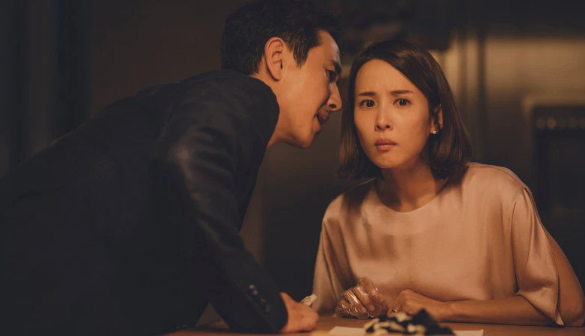
Parasite

Screen Shot 2020-02-23 at 15.14.42

I had heard nothing but unrelenting and unusually universal acclaim for Boo Joon-ho’s “Parasite” before I got to see it myself. Perhaps this influenced my perspective on the film, I would hope that it hasn’t but either way I don’t think I was as blown away by this as everybody seems to be.

Don’t get me wrong, for the first hour of the film I was on board completely; the film is clever, funny, slick, gripping, unique and incredibly insightful in its social commentary and I could completely understand why “Parasite” had become such a phenomenon. It was exciting and different to what I had come to expect in Hollywood films (perhaps this is a fault of my own for not engaging in more foreign film) and I enjoyed that sense of unpredictability. Almost exactly half way through the film however, there is such a sudden and dramatic shift to a style of thriller which is certainly consistent with Korean cinema, but was for me an unwelcome and jarring shift from something that was so fresh and unique to something that was by no means bad, but certainly lacking the originality and finesse of the first act. 

“Parasite” tells the story of the Kims, a poor Korean family who are wealthy in street smarts and savvy but in not much else. The eldest son, Kim Ki-woo (Choi Woo-shik) scores a tutoring job for the upper class family the Parks, and is in awe of their world, with servants and immaculate furnishings and in at complete odds to his own life in every possible sense. Ki-woo figures out fairly quickly that the Parks are completely cushioned and protected from the rest of the world, and unbelievably naive. Armed with this knowledge, the Kim family gradually infiltrate the Park home and fill every household position while the Parks are meanwhile completely oblivious to how blatantly they’re being manipulated. While the Parks are away one weekend, the Kims go to town on their liquor and food but are interrupted by a visit from the previous maid, and their entire scheme is threatened as the Kims struggle to maintain their deception of the Park family.

This sudden shift to thriller that I mentioned earlier is by no means to the complete detriment to the film; the second act works well enough, but I found that the scares and plotting and action followed a more conventional formula than the first act, which disappointed me. I can’t emphasise enough how much I loved that first act, the social commentary was clever and multi-layered, demonstrated especially well in the conversations between Mr Park (Sun-kyun Lee) and Mr Kim (Kang-ho Song). There is an ongoing motif of the Parks commenting on the smell of the Parks, “like when you boil an old rag” and the Parks’ disdain for the poor is demonstrated in that they’re completely unaware of it; they may see themselves as above such prejudices, but they will never see the Kims as their equals.

There is also a real sense of fun in the first act of the film, we as an audience feel like we’re in on the scam and enjoy watching the Parks being duped so heavily. The Kims are by no means portrayed as virtuous or morally superior to the Parks, they’re actually quite despicable in many instances. One of the best observations made in the film is how money acts as an iron, and smooths out all creases. “She’s nice because she’s rich! Hell if I had all this money, I’d be nice too!” I’m not sure if I agree with this entirely, but it’s an interesting thought that the rich have the luxury of being polite and nice because they don’t have the pressures associated with being poor. 

I’m glad that “Parasite” and Boo Joon-ho are receiving such acclaim and attention, it was a good reminder for me certainly to expose myself to more foreign films. “Parasite” is a fresh and exciting film with a stellar script and unbelievable direction and I enjoyed it immensely. However, I can’t help but feel that as “Parasite” progressed, the film began to lose a little of what had initially made it original and so wonderfully compelling, and I did find myself wondering what might have happened had it continued down that road.

By Jock Lehman

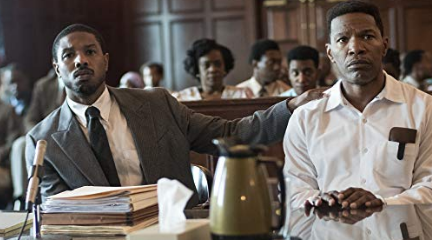
Just Mercy

Screen Shot 2020-02-15 at 16.37.54

What a a cop out.

Destin Daniel Crettin’s “Just Mercy” reeked of self importance and laziness; the actors and director know that this an emotional subject matter and it’s almost comical how little has gone into this film in terms of character development and technique. The script is so pumped full of sanctimonious drivel that the actors aren’t able to transcend beyond two dimensional cardboard cutouts to actual living and breathing people.

In the hands of the right director this could have been an absolute beauty; Michael B. Jordan plays Bryan Stevenson, a young black Harvard law graduate who moves to Alabama to represent prisoners on death row. He meets Walter “Johnny D.” McMillian (Jamie Foxx), who has been wrongly accused and sentenced to death for the brutal murder of a young white girl. Stevenson discovers that Johnny D’s conviction is entirely based upon the unreliable testimony of an already twice convicted felon Ralph Meyers (Tim Blake Nelson in the only convincing performance of the entire film). The rest of the film is Stevenson seeking to have Johnny D’s trial reopened.

It’s an incredible story, and should have been relatively easy to translate to film. “Dead Man Walking” is one of my favourite movies, and is as gripping and riveting as this is dull and uninspired. I actually remember wondering in “Just Mercy” how could it be possible that Sean Penn’s character in “Dead Man Walking”, who was actually guilty of the crime for which he had been charged, could seem more human and relatable than Jamie Foxx in “Just Mercy”. I think it’s because “Dead Man Walking” actually treated Sean Penn’s character as a proper and complex individual and gave him dialogue that was organic and true to the character rather than the generic and unimaginative nonsense that Foxx was coming out with.

I’m not a huge fan of Jamie Foxx as an actor, and I’m surprised that he’s been receiving so much acclaim for his performance. I found him so flat in this film; there was nothing remarkable or memorable about his portrayal and he brought no warmth or humanity to who was a real life person with his own traits and ticks and unique characteristics which Foxx had an obligation to at least attempt to capture. In my mind, Foxx failed completely and it was difficult for me to become invested in the outcome of the trial when I couldn’t see Johnny D as anything more than a plot device.

Jordan is fine as the ambitious young lawyer, but again nothing remarkable. What I found strange about the film was how easy the whole process seemed. I was looking forward to this film as a legal court room thriller, (which is how it had been advertised), and was confused how the trial only actually began two hours into the run time. There is no freaking way that the trial ended as quickly as it did or in those circumstances, and the film was over three minutes later in such an anticlimactic finale that I was sure I must have missed something or had fallen asleep.

This could have been a gripping legal thriller highlighting the injustice brought upon African Americans in the US court system. Instead “Just Mercy” is an insipid, uninspired and reductionist medley of mediocre and manipulative rhetoric and when a film doesn’t care about the actual people portrayed in the film or their story and pushes the political message to the forefront, both the individual and the cause get lost along the way.

By Jock Lehman

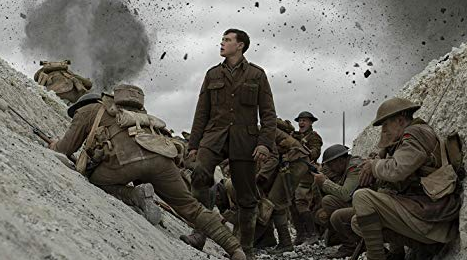
1917

Screen Shot 2020-02-03 at 20.32.35

Sweet Holy Wilhelm-ing Dooly Mendes!

Sam Mendes’ “1917” transcends what I would ordinarily consider great filmmaking. This was an absolute masterpiece; mesmerising, terrifying, enthralling and technically just phenomenal. It’s a simple story, beautifully told by someone who is an absolute master at his craft and with an obvious love for movies that is evident in every frame. There is not one moment of wasted time or dialogue or plotline in this film; everything was coordinated beautifully and created a seamless and organic product where every scene, every note and every directorial decision enriched the other. I was truly astounded by “1917”, and I think that it will become one of those films that people will return to time and again and find something beautiful or extraordinary or terrifying upon each new viewing.

Like I said, this is a film with a very simple premise (and interestingly enough based on stories told to Mendes by his grandfather) chronicling the story of two young British soldiers in WWI who are instructed to deliver an urgent message to call off an attack shortly after the German retreat during Operation Alberich in 1917. The story is almost entirely told in real time, and has received well deserved praise for filming as if one long, uninterrupted sequence (similar to 2015’s “Birdman”). The two young soldiers, Will Schofield (George MacKay) and Thomas Blake (Dean-Charles Chapman) have been well cast and I think it was clever to go with two relatively unknown faces. These two young men represent all young, naïve British men who had been thrust into WWI, and while MacKay and Chapman give solid performances, they’re not overstated or even particularly notable (the acting categories were the only Oscar nods that “1917” didn’t receive). This isn’t a criticism, I feel like it was a deliberate choice by the director because this film isn’t necessarily about these two individuals, it’s a journey that could have happened to any young soldier, it’s just that the camera is following these two. In a strange way, had the acting been world class and dominated the run time, then it may have taken away from the film as a whole. “1917” isn’t a showcase for acting; the cinematography, score and technical feats in this film are far bigger players than any actor, and Mendes knows this.

I was initially quite sceptical when I heard that the film would be shot in one long sequence, not necessarily because of the technique itself, but more that the film may seek to rely on this as a gimmick to show off rather than to service the story (similar to the live singing in Tom Hooper’s “Les Miserables” or using the same actors across decades in “Boyhood”). Having now seen “1917”, I can’t imagine it being filmed any other way; the one long sequence creates an air of perpetual suspense and urgency but also a unique sense of intimacy which I don’t think would have happened otherwise. The cinematography in the pivotal action scenes is something I’ve never seen before; visually this film was extraordinary, and is on such a sheer scale that the fact Mendes has pulled this off at all is commendable. The brutality of war isn’t as intense as such films as “Saving Private Ryan”, instead the horror is somewhat understated and often unacknowledged by the characters on screen, which in itself is an unnerving indication of how commonplace and accepted their terrifying reality had become.

I was completely blown away by this film. This was one of the most electrifying and memorable cinema experiences I’ve ever had and has provided a powerful reminder that while stories like this may seem diminutive in the great scale of the war, to the young men who lived through it, it was as terrifying and as important as could possibly be.

By Jock Lehman

The Gentlemen

Screen Shot 2020-01-25 at 13.20.39

This is the kind of movie that looks great in trailers and in movie posters. Ripper cast, guns, slick suits, drugs and fast cars, how can it miss? Unfortunately, Guy Ritchie’s “The Gentlemen” is all flash and dazzle with very little below the surface and nowhere near enough to maintain my interest for the entire run. I enjoyed moments of this, there are some talented actors on show here (especially Hugh Grant) but the film itself never really finds it’s feet.

It’s not really that funny, the action is slow and drawn out, there are far too many sub-plots and unnecessary characters to keep track of and the mobster antics are confusing and somehow never rises above the petulance of little kids. It’s not trying to be Scorsese, and it didn’t have to be! If this followed a simple plotline, cut most of the fluff and let three or four gun actors do their thing this would have been a good bit of fun. There’s a solid, entertaining premise here, but “The Gentlemen” is almost completely forgettable, (even immediately after the credits I struggled to remember or figure out what exactly happened).

I don’t even know how to summarise this; Hugh Grant plays two bit tabloid journalist Fletcher who is attempting to blackmail druglords Micky Pearson (Matthew McConaughey) and his henchman Raymond (Charlie Hunnam) with stories of their no-goodery. The film basically plays out with Fletcher narrating to Raymond his understanding of what happened, with Pearson seeking to cash out of his marijuana empire and the deluge of corruption, bribery and backstabbing that ensues as his competitors seek to pull it out from under him.

Performance wise, it’s pretty consistent across the board. McConaughey’s rugged swagger translates well as Micky and Hugh Grant is good fun as the sleazy and squirmy Fletcher. Colin Farrell and Henry Golding are perfectly fine as rival gangsters and Farrell himself has a couple of real zingers (particularly in one scene in which he tells one of his henchmen that it wasn’t racist for someone to call him a black c*nt, since he was black and he was a c*nt). Michelle Dockery was particularly good as Mickey’s wife Rosalind, in fact to me she seemed like the only one who could hold her own as a gangster in amongst the other fellas on screen who always seemed just a little out of place.

It’s not that there aren’t funny moments, there are, it’s just that they’re few and far between and I could never quite get over the sense that the humour seemed somewhat artificial and stilted. I think that’s what the biggest problem was for me; I was very conscious throughout the film that these were all actors playing gangsters rather than actually embodying three dimensional bad guys with real and authoritarian presence. I didn’t find any of them remotely intimidating or really buy any of them as mobsters; the threats and skullduggery were somehow very juvenile and half-assed.

Guy Ritchie is by no means a bad director, but I think he missed the mark here. The pacing was all over the place and it’s extraordinary how a movie with so many guns and fist fights could drag for as long as it did. There are definitely moments of enjoyment in “The Gentlemen”, it’s just that there wasn’t a whole lot to bridge the parts in between. I could understand what Ritchie was going for here; there’s absolutely a place for sheer, flashy entertainment, but for me, this wasn’t it.

By Jock Lehman

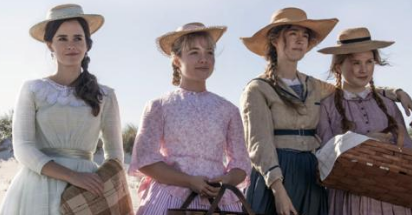
Little Women

Screen Shot 2020-01-14 at 21.10.09.png

This was a genuinely joyous experience.

For a story that is so heavily dependant upon the central characters, any filmic adaptation is shot from the start if we as an audience can’t grow to care for the March girls and be moved by their lives. Even more so since these are some of the most iconic and adored figures in literature; if the characters are miscast, the best script in the world won’t save it.

Luckily, Greta Gerwig has cast not only the March girls (with one unfortunate exception) but the entire array of supporting characters impeccably and matched them with a screenplay that manages to respect the original classic but also incorporates a modern and refreshing angle. I’m not the biggest fan of stuffy period dramas, especially if they’re strictly and rigidly adherent to the source material without taking into account the values and themes of the times. Gerwig has subverted the genre so beautifully; the dialogue is still very typical of the 18th century, but the pacing and timing is much more consistent and identifiable with modern audiences. This is especially the case with regard to the surprising comedic streak throughout the film, the banter in that little family is rapid fire and cutting and genuinely funny.

The story follows the lives of the four March sisters Jo (Saiorse Ronan), Meg (Emma Watson), Amy (Florence Pugh) and Beth (Eliza Scanlen) as they grow from adolescent girls to grown women and their joys and sorrows along the way. The film jumps back and forth through periods in the girls’ life, which was a clever twist on the classic and a nice way to distinguish it from other adaptations, but also contrasts the times of happiness and tragedy beautifully. The chemistry and sense of sisterhood between the four girls is irresistible, and Gerwig has done well not to sugar coat or sweeten the rivalries and jealousies between them; when Amy burns Jo’s manuscript, you can see the palpable hatred that somehow can only be triggered between siblings.

Saiorse Ronan is sensational as Jo and brings a definite vulnerability and complexity to the role which I don’t think many other actresses could have done; Ronan’s Jo is opinionated yet lonely, fiercely independent yet longing for love like her sisters. At times I did find that there wasn’t a great deal of distinction between her performance as a teenager and as a grown woman. But when she’s on, holy dooly is she on, particularly in one scene between Jo and her mother (Laura Dern) in which she laments the role of women in her world being reduced to objects of love and prettiness, but that she’s lonely and has pushed away her chances for love in her pursuit of independence.

As good as Ronan is though, for me the knock out star of this film was Florence Pugh as Amy; there’s a difference between being a good actor and having that distinct sense of Hollywood star power and she’s got it in spades. I think out of everyone in the film, she was the one that properly embodied her character and did so with such unbelievable range, well warranting her Best Supporting Actress Oscar nom.

As interesting and diverting as Pugh is as Amy though, that’s how bland and disappointing Emma Watson is as Meg. I just don’t get what people’s fascination is with her, she was the only distraction in what was an otherwise perfect film. While I could get lost in the world that Gerwig has created, the only times I was pulled out of it was when Watson was on screen, looking like she was playing period dress up (or rather a mannequin playing period dress up, given the lack of emotion or reaction anywhere in her performance).

I can understand why this story has withstood the test of time; more than any film I have seen in a very long time, Greta Gerwig’s “Little Women” reminded me of the inherent power of cinema. This was so beautifully and intricately crafted that not only did I believe the characters and their world, but was deeply invested in it.

By Jock Lehman

Jojo Rabbit

Screen Shot 2020-01-11 at 13.42.27

image-1

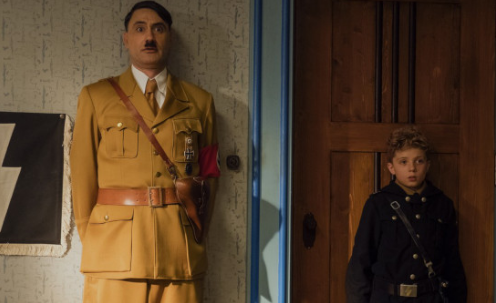
There is an air about certain films that really bothers me, where it’s like the director is sitting there, looking at the audience with a smug look on their face and awaiting roses and applause to be thrown at them. Taiki Waititi’s “Jojo Rabbit” reeked of this, as if the film was trying to convince us that it’s a provocative and insightful masterpiece without actually having to follow through.

It’s a shame because the concept of the film is actually quite a clever one; Johannes “Jojo” Betzler (Roman Griffith Davis) is a ten year old German boy who’s a member of the Hitler Youth during WWII and idolises Adolf Hitler above all else. He wants so desperately to be a good Nazi and creates an imaginary version of Hitler he calls Adolf (played by the film’s director Taika Waititi) who is his friend and who tells him that the older boys bullying him aren’t what the Führer is looking for and that he needs to be brave. Jojo’s faith in the Third Reich is challenged however when he discovers that his mother Rosie (Scarlet Johansson) is harbouring a young Jewish girl (Thomasin McKenzie) in their attic. But he’s confused, because Elsa doesn’t have horns or a tail, so he promises to keep her hidden if she tells him all the secrets of the Jews for his new book.

It’s a solid premise for a film; highly original and provocative, but a film is nothing without proper execution and for me, “Jojo Rabbit” just missed the mark in so many ways, especially with regard to the comedic and satirical slant it was so desperately angling for. I think what’s happened is that the scriptwriters have relied solely on the zaniness of the premise without exploring it with any real insight and without actually managing to say anything profound at all. I didn’t laugh once in the scenes with Jojo and Adolf; the humour was lazy, slapstick and inconsistent and oozed with the pretentiousness of a high school drama piece that’s gotten carried away with its own importance. The amount of clunky symbolism in this is almost unbearable (whoever put forward the idea for Jojo not being able to tie his shoelaces until he’s brave enough to take on the big world should have been sacked).

All the German characters are one dimensional caricatures who are neither funny nor sinister performed by Americans with broken, laughable German accents. The trick with satire is to handle it so that it’s ridiculous enough to make us laugh but realistic enough that we as an audience can recognise an element of truth in it. These characters, especially the Nazis, were so absurd and cartoonish that I couldn’t suspend my disbelief and allow myself to buy into this world. And it’s enough, someone needs to stop Rebel Wilson now before she derails something else.

While the comedic and satirical aspect of the film is a total flop, there are elements that worked pretty well as a war thriller. There are some genuine moments of suspense, particularly a tense scene when the Gestapo visit Jojo’s house looking for fugitives which had me on proper tenterhooks. There are almost moments of sweetness between Jojo and Elsa, but the script is tonally inconsistent and again, the screenwriter has relied on the fact that Griffin Davis is adorable and angelic rather than properly developing him a proper voice. His expression jumps all over the place; sometimes he speaks like a five year old, then sometimes like a grown man and sometimes with expression more consistent with the twenty first century than WWII. Griffin Davis actually does fairly well in the titular role; he could have been completely intolerable as child actors so often are but he showed impressive range and carries himself surprisingly well (even if he wasn’t working with the greatest material). Scarlett Johansson was admittedly sensational as Jojo’s mother, (holy dooly has she had a good year) and brought a warm and genuine humanity to a film which is otherwise so superficial and ankle-deep.

There’s a good film somewhere in here, and in the hands of someone like Tarantino this could have really been something interesting, but a clever concept isn’t enough without substance to support it. It was a bold move taking on such a risky subject matter and in my mind it hasn’t paid off; what’s left is a shell of a film which doesn’t have anywhere near the incisiveness, heart and message that it thinks it does.

By Jock Lehman